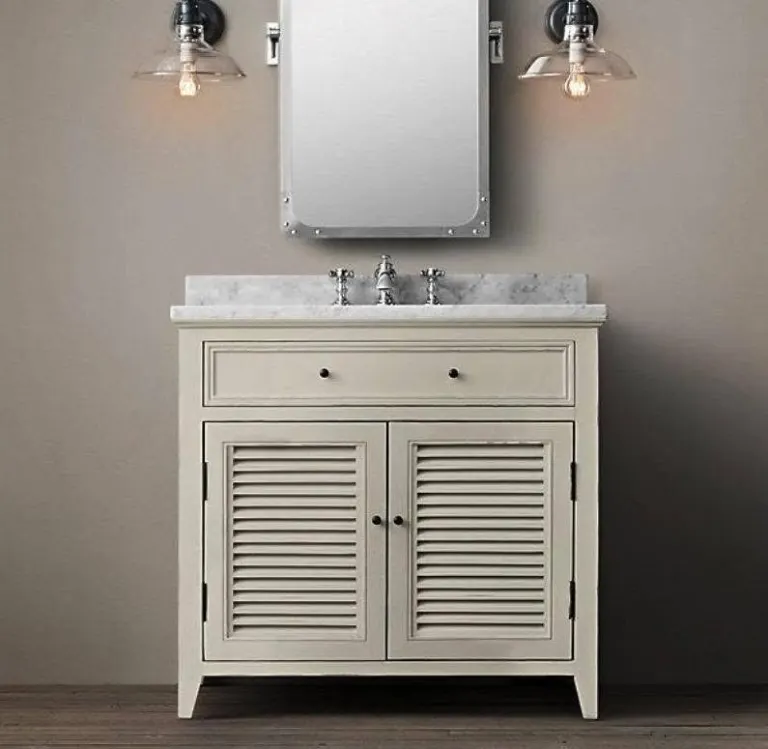
Volumetric Bathroom-Kitchenette Pods, DİR Customs License Reconciliation, and Plumbing Interface Engineering for the Import and Export of Kitchen and Bathroom Cabinets in Turkey
The global construction industry is rapidly shifting from stick-built on-site interior fit-outs toward factory-engineered volumetric modules and pre-plumbed joinery systems, placing the import and export of kitchen and bathroom cabinets in Turkey at the center of modern off-site construction (MMC — Modern Methods of Construction).

Positioned at the industrial crossroads linking European modular housing developers, North American multi-family builders, and Middle Eastern hospitality contractors, Turkey’s cabinetry and architectural engineering sector increasingly delivers factory-plumbed bathroom vanity modules, pre-piped kitchen wet-wall cores, and turnkey volumetric bathroom-kitchenette pods. Simultaneously, Turkish developers and luxury architectural importers bringing ultra-bespoke European sanitary-integrated cabinetry and high-tech concealed plumbing modules into Istanbul’s Sarıyer, Beşiktaş, and coastal resort developments must navigate strict Turkish municipal plumbing codes, pressure-testing rules, and customs classification rules.
Executing high-volume operations in the import and export of kitchen and bathroom cabinets in Turkey requires equal mastery over administrative customs accounting—specifically Inward Processing Regime (Dahilde İşleme Rejimi – DİR) Export Commitment Reconciliation (İhracat Taahhüt Kapatma)—and cross-border technology transfer agreements when foreign brands license proprietary modular joinery systems to Turkish plants. A single unclosed DİR authorization due to mismatched panel wastage calculations or omitted sub-component HS codes can trigger retroactive tax assessments plus double-rate penalties, while incompatible metric-to-imperial plumbing rough-in manifolds can stall hundreds of apartments on an overseas job site. This comprehensive technical manual examines pre-plumbed cabinetry and volumetric pod engineering, DİR license reconciliation protocols, international plumbing interface standards, and technology transfer licensing governing the import and export of kitchen and bathroom cabinets in Turkey.
1. Pre-Plumbed Wet-Wall Cabinetry & Volumetric Bathroom-Kitchenette Pods
As skilled site-plumbing labor shortages intensify across the United Kingdom, Germany, Scandinavia, and North America, international contractors increasingly leverage the import and export of kitchen and bathroom cabinets in Turkey to shift complex MEP (Mechanical, Electrical, Plumbing) assembly off the construction site and onto controlled factory floors.
Engineering Factory-Plumbed Vanity & Kitchen Sink Modules
1. Integrated PEX-a / PP-R Manifold & Low-Profile Trap Assemblies:
• Rather than shipping empty sink base cabinets and requiring field plumbers to drill holes and solder copper lines inside tight cabinet carcasses, export-oriented Turkish factories pre-install WRAS-approved (UK), DVGW-certified (Germany), or NSF/ANSI 61 & cUPC-certified (USA/Canada) cross-linked polyethylene (PEX-a) hot/cold supply manifolds, quarter-turn brass isolation angle valves, and space-saving telescopic polypropylene bottle traps directly inside the cabinet’s rear service cavity.
• Every pre-plumbed cabinet undergoes a 10-bar (145 psi) hydrostatic pressure test on the Turkish assembly line prior to packaging, with a stamped pressure-test certificate affixed inside the sink base.
2. Volumetric Bathroom & Kitchenette Pod Manufacturing:
• Specialized modular construction plants in Istanbul (Tuzla/Gebze), Bursa, and İzmir fabricate complete steel-framed or composite-panel bathroom pods and studio kitchenette pods outfitted with waterproof PVC/WPC vanities, sintered-stone countertops, wall-hung concealed cisterns, tiled wet-room floors, LED mirror cabinets, and compact kitchenettes.
• Pods are shrink-wrapped and shipped via 40’ Flat Rack or Open-Top containers (or 13.6m European mega-trailers) directly to construction sites in London, Frankfurt, or Riyadh, where tower cranes hoist them straight onto structural floor slabs—cutting on-site interior fit-out schedules by 40% to 55%.
Customs Classification of Pre-Plumbed Cabinetry & Volumetric Pods
• Pre-Plumbed Wooden or PVC Vanity Units: Under GRI 3(b) of the Harmonized System, adding factory-fitted brass angle valves, PEX supply hoses, and plastic traps to a bathroom vanity or kitchen sink cabinet does not alter its essential character; the unit remains classified under HS 9403.60.90 (wooden bathroom cabinet), HS 9403.70.00 (PVC bathroom cabinet), or HS 9403.40.10 (fitted kitchen unit).
• Complete Volumetric Bathroom/Kitchenette Pods: Fully enclosed, multi-trade structural room pods incorporating walls, flooring, sanitaryware, electrical wiring, and cabinetry are classified under HS 9406.90 (Prefabricated buildings — Other), requiring careful origin value-added calculations when claiming EUR.1 or UK-Turkey FTA duty-free status.
2. Regional Plumbing Rough-In & Valve Thread Compatibility Matrix
A costly engineering pitfall in the import and export of kitchen and bathroom cabinets in Turkey occurs when pre-drilled vanity tops, faucet holes, or pre-installed supply valves fail to match destination national plumbing standards.
Plumbing Interface Parameter Europe, UK, Turkey & GCC Standard North America (USA & Canada) Standard Turkish Export Engineering Protocol
Supply Valve Thread Standard BSP (British Standard Pipe — ISO 228) parallel threads (G 1/2" wall stub-outs to G 3/8" flexible braided faucet hoses). NPT (National Pipe Taper — ANSI/ASME B1.20.1) (1/2" NPT wall rough-in to 3/8" compression faucet supply lines). Factories maintain segregated ISO 228 BSP and ANSI NPT valve inventories; CAD shop drawings lock thread spec before procurement.
Drain & Waste Trap Diameter DN 32 (32mm) or DN 40 (40mm) metric push-fit polypropylene waste pipes. 1-1/4" (31.75mm) lavatory bathroom drains; 1-1/2" (38.1mm) kitchen sink tailpieces (slip-joint/ABS/PVC). U-cutout drawer clearances and rear trap notches are sized to accommodate destination trap heights and P-trap/S-trap geometries.
Faucet Hole Boring Geometry Single-hole 35mm diameter standard for monobloc mixers (or wall-mounted concealed mixer cutouts). Single-hole (1-3/8" / 35mm), 4-inch (102mm) centerset, or 8-inch (203mm) widespread 3-hole drilling. CNC waterjet/router drills exact hole spacing per regional SKU; 3-hole widespread requires wider rear tap-ledge clearance behind basin bowl.
Overflow & Pop-Up Drain Assembly European EN 274 slotted/unslotted click-clack waste assemblies. ASME A112.18.2 / CSA B125.2 cUPC-certified pop-up drain assemblies. Ensure cUPC certification stamps are laser-etched on brass drains exported to US/Canadian municipal plumbing jurisdictions.
Critical Audit Mechanics for DİR License Closure
1. Bill of Materials & Wastage Rate (Fire Oranı) Accuracy:
• Every DİİB specifies fixed input-to-output consumption ratios (sarfi̇yat tablosu) verified by Chamber of Industry technical experts. For example, if a factory imports 10,000 m² of German high-gloss acrylic foil to press onto MDF cabinet doors for export, the DİİB accounts for CNC trimming and edge-offcut wastage (typically 4% to 8%).
• If actual exported cabinet square footage falls short of the declared input consumption—or if offcuts were not properly documented—the Ministry of Trade treats the unaccounted imported foil as diverted into the domestic Turkish market, assessing full Customs Duty, İGV, 20% VAT, plus double-rate administrative penalties under Article 238 of Customs Law No. 4458.
2. Mandatory Customs Declaration Endorsements (Satır Kodu Matching):
• When exporting finished kitchen or bathroom cabinets manufactured with DİR-imported inputs, the Turkish customs broker must enter the exact DİİB license number and line-item code (satır kodu) on every BİLGE export declaration (İhracat Beyannamesi). Omitting the line-item code prevents the export declaration from crediting toward DİR commitment closure—an error that must be corrected via formal customs amendment (redresman) before the DİİB expiration deadline.
3. Compensatory Tax (Telafi Edici Vergi – TEV) on EU / FTA Exports:
• Under EU-Turkey Customs Union and bilateral FTA rules, if a Turkish manufacturer imports third-country raw materials (e.g., Chinese plywood or Malaysian rubberwood) under DİR without paying Turkish MFN duties, and subsequently exports the finished cabinets to the European Union under A.TR or to an FTA partner under EUR.1, the exporter must pay Compensatory Tax (Telafi Edici Vergi – TEV) equal to the EU Common Customs Tariff rate on those third-country inputs prior to DİR closure.
4. Technology Transfer & IP Licensing Agreements in Turkish Cabinetry
As European and North American kitchen brands increasingly localize production in Turkey to serve Eurasian and Middle Eastern markets without shipping bulky air-filled containers from Western Europe, Technology Transfer and Brand Licensing Agreements have become a sophisticated commercial model within the import and export of kitchen and bathroom cabinets in Turkey.
Structuring Cross-Border Manufacturing Licenses
• Technical Know-How & Parametric CAD Library Licensing: The foreign licensor provides proprietary modular engineering libraries, patented aluminum profile extrusions, and quality-control SOPs to a vetted Turkish manufacturer in exchange for an upfront technology transfer fee plus a 3% to 7% running royalty on net ex-works sales.
• Withholding Tax (Stopaj) & VAT2 Reverse-Charge Compliance in Turkey: Under Turkish Corporate Tax Law and Double Taxation Avoidance Agreements (DTAAs), royalty payments remitted abroad by a Turkish licensee to a foreign licensor are subject to withholding tax (stopaj) (typically reduced from 20% to 10% under bilateral tax treaties with Germany, Italy, the UK, and the USA upon presenting a valid Certificate of Residence) plus 20% Reverse-Charge VAT (KDV-2), which the Turkish company simultaneously claims back as deductible input VAT.
5. Frequently Asked Questions (Pre-Plumbed Cabinets, DİR Reconciliation & Plumbing Codes)
Can Turkish manufacturers supply bathroom vanities and kitchen sink cabinets with pre-installed plumbing manifolds?
Yes. Export-focused Turkish manufacturers pre-install WRAS, DVGW, or cUPC-certified PEX-a supply lines, brass angle valves, and low-profile bottle traps inside cabinet service voids, pressure-testing each unit to 10 bar (145 psi) prior to shipment while keeping the assembly classified under standard cabinetry HS codes (9403.40 / 9403.60 / 9403.70).
What plumbing thread differences must be specified when exporting pre-plumbed cabinets from Turkey to the USA versus Europe?
Exports to Europe, the UK, Turkey, and the GCC require BSP (ISO 228) parallel threads (G 1/2" / G 3/8") and 32mm/40mm metric drains, whereas exports to North America (USA & Canada) require NPT (ANSI/ASME B1.20.1) tapered threads (1/2" NPT / 3/8" compression) and cUPC-certified 1-1/4" or 1-1/2" drain assemblies.
What happens if a Turkish cabinet exporter fails to close its Inward Processing Regime (DİR) license on time?
Failure to reconcile and close a DİİB export commitment within its statutory validity window (plus permitted extensions) results in forfeiture of pledged bank guarantees, retroactive collection of suspended Customs Duties, İGV, and 20% VAT on unexported inputs, and penalties up to twice the customs duties under Article 238 of Turkish Customs Law.
Are royalties paid by a Turkish factory to license a foreign kitchen brand subject to Turkish withholding tax?
Yes. Cross-border royalty remittances from Turkey are subject to withholding tax (stopaj)—typically 10% when covered by an active Double Taxation Avoidance Agreement with a Certificate of Residence—alongside 20% Reverse-Charge VAT (KDV-2).