Vanity Cabinet Total Cost of Ownership for Hotels: Comparing Five-Year Costs of Three Specification Levels
The purchase price of a hotel vanity is only the first line of its real cost. This guide shows how to build a simple five-year model that adds repairs, refurbishment and room downtime, so you can compare three specification levels fairly.
A vanity cabinet total cost of ownership model adds everything you spend on a unit over a set period, not just the invoice from the manufacturer. For hotels, a five-year window works well: it is long enough to expose weak specifications and short enough to stay realistic for budgeting. This article gives you a simple framework you can fill in with your own numbers, whatever market you operate in.
We deliberately do not quote prices here. Costs vary by country, material availability and project size. What does not vary is the structure of the calculation, and that is what helps you compare quotations on equal terms.
Why purchase price misleads
Bathroom units work in the harshest conditions of any hotel joinery: steam, splashes, cleaning chemicals and daily mechanical use. A unit that is cheaper on day one can become the more expensive choice if it needs early repairs or forces a room out of service.
Procurement teams often compare quotations line by line and stop at the total. A lifecycle view asks a different question: what will this unit cost the hotel by the end of year five, including the cost of the rooms it blocks when something goes wrong?
The five cost components
Keep the model simple. Five components are enough for a useful comparison.
- Initial cost: the unit price, plus packing, freight, duties and installation. Use the landed and installed figure, not the ex-works price.
- Routine maintenance: resealing silicone joints, tightening hinges, cleaning products that suit the finish, and engineering hours.
- Repairs and parts: replacement hinges, drawer runners, handles, re-edged panels and touch-up materials.
- Refurbishment or partial replacement: new doors and fronts, replaced tops, or complete unit swaps within the period.
- Downtime: the revenue lost, or the room moved to an out-of-order status, while repairs are carried out.
Define three specification levels
To compare fairly, describe each level in writing before you ask for numbers. The labels below are examples; adapt them to your brand standard.
Level A: Basic
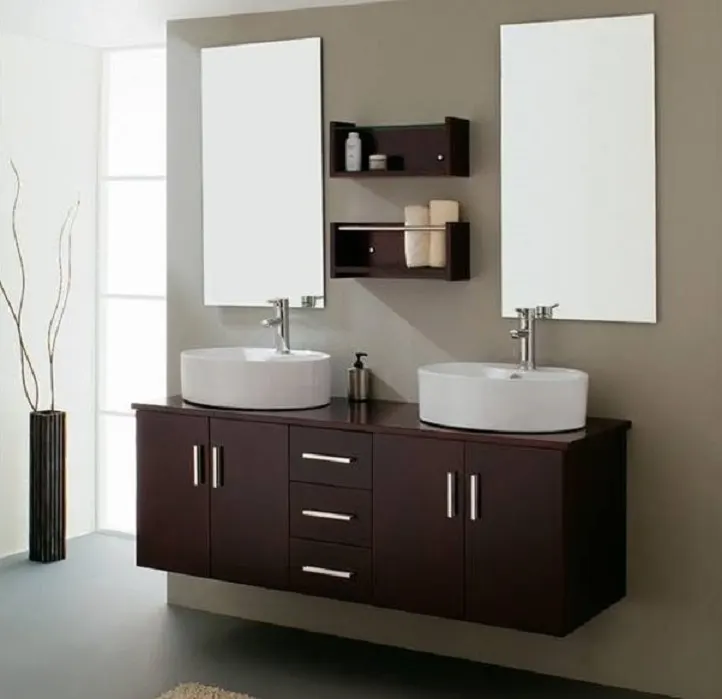
Standard moisture-resistant MDF carcass, laminate or foil fronts, PVC edge banding, entry-level hinges and runners, and a laminate top. This level suits tight budgets, but edges and joints are the most exposed to water.
Level B: Mid-range
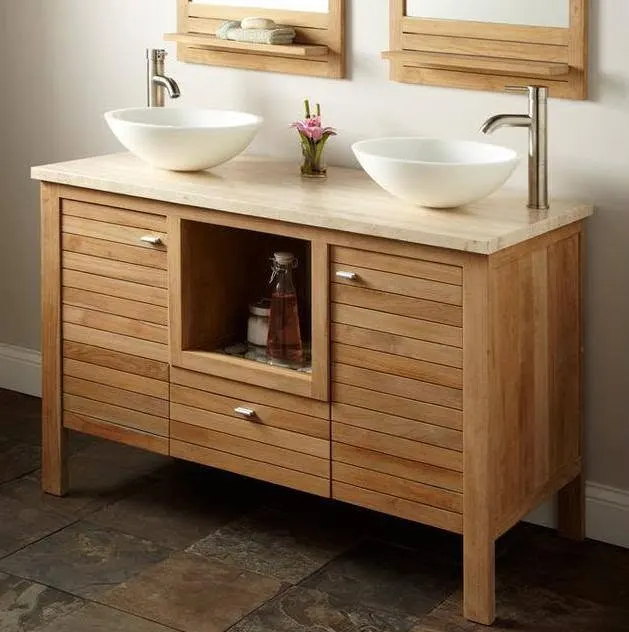
Moisture-resistant boards or HPL-faced carcasses, better edge banding such as ABS or laser-sealed edges, soft-close hardware with a clear load rating, and a solid surface or engineered stone top. Stainless or corrosion-resistant fixings are used where water reaches them.
Level C: Premium
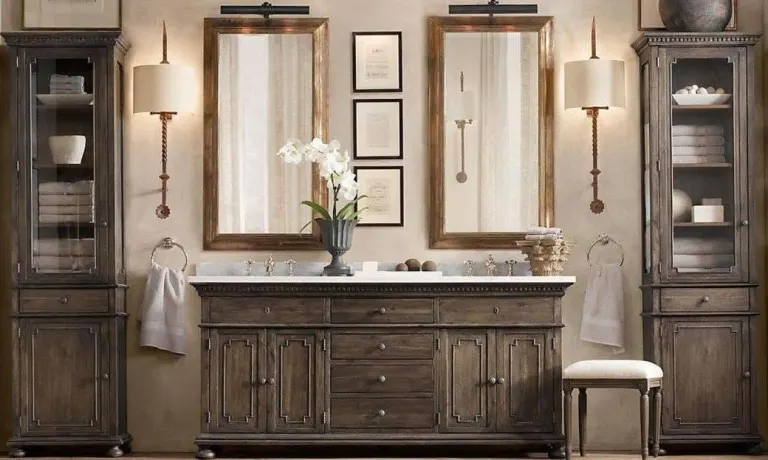
Marine plywood or HPL-clad carcass, veneer or lacquer fronts with a protective finish, concealed stainless hardware, natural or engineered stone tops with sealed cut-outs, and detailed plinth and back-panel construction. The initial cost is highest, and the expected maintenance is lowest.
A simple model you can copy
For each level, calculate the total over five years with this formula:
Five-year cost per unit = initial cost + routine maintenance + repairs and parts + refurbishment share + downtime cost
The table shows the structure. Fill the cells with your own quotations, engineering records and average room revenue. We have left values out on purpose so that nothing here is mistaken for a market price.
| Cost line | Level A | Level B | Level C |
|---|---|---|---|
| Landed and installed price | Your quote | Your quote | Your quote |
| Routine maintenance (5 years) | Estimate hours x rate | Estimate hours x rate | Estimate hours x rate |
| Repairs and parts | Expected incidents x cost | Expected incidents x cost | Expected incidents x cost |
| Refurbishment share | Fronts or top replaced? | Fronts or top replaced? | Fronts or top replaced? |
| Downtime | Room-days x daily value | Room-days x daily value | Room-days x daily value |
| Five-year total | Sum | Sum | Sum |
How to estimate each line realistically
Routine maintenance
Ask your chief engineer how long a seal check, hinge adjustment and deep clean take per unit in the current property. Multiply by the number of times per year they are done. A specification with sealed edges and stainless hardware generally asks for fewer interventions, but check this against your own records rather than assuming it.
Repairs and parts
Look at your maintenance log for the vanities you already operate. Count incidents such as swollen edges, loose hinges, jammed drawers and chipped tops. Use that history as the starting point for each level, then adjust for the improvements the new specification offers. If you have no history, state your assumption openly so that others can challenge it.
Refurbishment share
Decide whether any level is likely to need new fronts or a new top inside five years. If a refresh is planned anyway, include it for every level so the comparison stays honest. Spare parts planning helps here: holding extra doors, drawer fronts and hinges from the original batch reduces both cost and waiting time.
Downtime
This is the line most buyers leave out. A repair that takes a few hours may not affect sales, but a replacement that needs a unit to be removed, modified and refitted can take a room out of inventory for a day or more. Estimate room-days lost per event and multiply by the average daily value your revenue team uses. Use a conservative figure and keep the logic visible.
What usually changes the result
Several variables move the totals more than expected:
- Climate and humidity: coastal, tropical and poorly ventilated bathrooms increase the value of moisture-resistant boards and sealed edges.
- Occupancy and turnover: city hotels with frequent check-ins put more wear on drawers, handles and door edges than seasonal properties.
- Housekeeping methods: aggressive cleaning chemicals attack some finishes and metals. Match the finish to the cleaning routine.
- Installation quality: poor levelling, missing sealant or unsupported tops cause failures that no specification level can fully prevent.
- Availability of spares: a unit that cannot be repaired because parts are no longer available becomes a replacement cost.
Reading the results
Once the three totals are in front of you, look at the shape as well as the numbers. Typically you will see the initial cost rise from Level A to Level C while repair and downtime lines fall. The point where the lines cross depends on your property, which is exactly why a generic answer is not useful.
It is also valid to conclude that Level B is the right balance, or that Level A is acceptable for low-exposure bathrooms such as secondary powder rooms. Mixed strategies are common: a premium specification in suites and a mid-range one in standard rooms, built on the same design language so the look stays consistent.
Making the comparison fair in quotations
A five-year model only works if the quotations describe the same scope. Ask every supplier to list board type, edge banding, hardware brand or load rating, top material and thickness, sealing details, packing method and included spare parts. If one quote leaves out a top or hardware, normalise it before you compare. Our related guide on comparing two vanity quotations explains this step in more detail.
Also ask for sample units or a mock-up. Seeing the junctions, edges and hardware in your own bathroom layout lets you judge likely wear points before the full order is made.
Common mistakes in lifecycle costing
- Using ex-works prices instead of landed and installed cost.
- Ignoring downtime because it does not appear on a supplier invoice.
- Assuming a premium material removes the need for correct sealing and installation.
- Applying one failure rate to all levels without evidence.
- Choosing a period that is too short to show the difference, such as one or two years.
Next step
If you are comparing specification levels for a new hotel or a renovation, send us your bathroom drawings or room schedule. We will help you describe the three levels clearly, price each one on the same scope and suggest which spare parts to hold, so that your five-year comparison rests on solid information.
Sıkça Sorulan Sorular
What is total cost of ownership for a hotel vanity cabinet?
It is the full cost of a vanity unit over a chosen period, usually five years. It includes the landed and installed price, routine maintenance, repairs, refurbishment and the revenue lost when a room is out of service during repair work.
Why use a five-year period for the comparison?
Five years is long enough for weaknesses such as swollen edges, loose hinges and worn finishes to appear, yet short enough to forecast with reasonable confidence. You can extend it to seven or ten years if your renovation cycle is longer.
Is the most expensive specification always the cheapest over time?
No. A premium specification often reduces repairs and downtime, but the benefit depends on climate, occupancy, housekeeping methods and installation quality. In low-exposure bathrooms, a mid-range level may give the better balance.
How do I estimate downtime cost for a bathroom repair?
Estimate how many room-days a typical repair takes out of service, then multiply by the average daily value your revenue team uses for that room type. Keep the assumption conservative and write it down so others can review it.
Can Palmiye help me prepare the comparison?
Yes. Send us your drawings or room schedule and we can describe three specification levels on the same scope, with board, hardware, top and packing details listed, so you can compare quotations and plan spare parts.
Every hotel project is different. Send us your drawings or room schedule for a tailored proposal on materials, lead time and shipping.