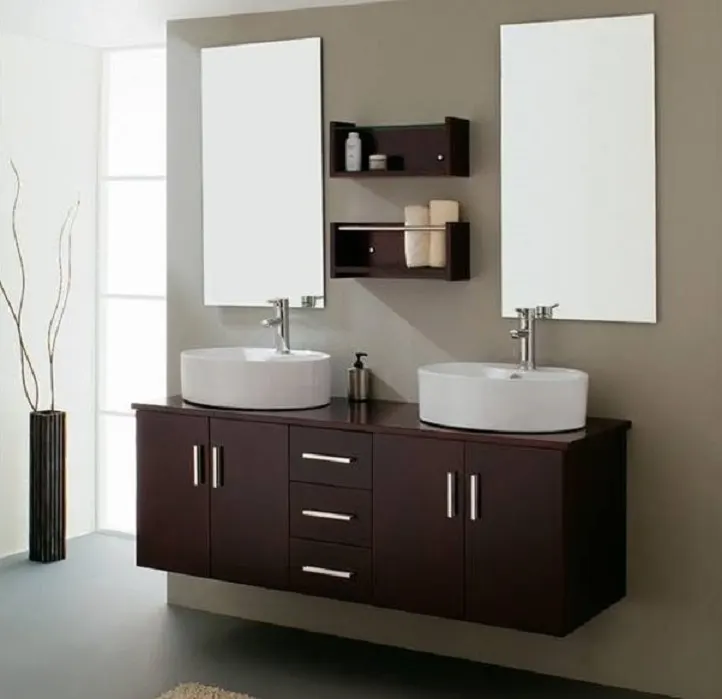
Vanity Cabinet Delivery Sequence and Staging on Site: Where to Store Bathroom Units During Fit-Out
Vanity cabinets usually arrive weeks before the bathrooms are ready for them. This guide explains where to hold crates, what conditions protect the finishes, and how to stage deliveries so units reach the right room undamaged.
The best place for vanity cabinet site storage is a dry, enclosed, lockable area with stable temperature, sitting on a clean level floor and away from wet trades. Crates are rarely installed on the day they arrive, so where they wait, and for how long, often matters more to the final finish than the packing itself. This guide covers the practical decisions for hotel fit-out storage, from choosing a space to releasing units floor by floor.
Why storage is a real risk for bathroom joinery
A vanity cabinet leaves the factory with finished surfaces, sealed edges and fitted hardware. On a construction site it meets plaster dust, wet screed, tile adhesive, grinding and temperature swings, often within the same week.
Most of the damage we see discussed by contractors is not caused by transport. It happens during the waiting period, when units sit in a corridor, a basement or an open loading bay. Damp can swell board edges, dust can scratch lacquer when crates are opened early, and stone tops can crack when stacked or knocked by trolleys.
Planning storage as part of the delivery programme, rather than leaving it to the site team on the day, avoids most of these problems.
What conditions the units need
Treat the storage area as a controlled space, even if it is temporary. The following conditions protect most finishes, whether lacquer, veneer, HPL or stone-effect surfaces.
- Dry and enclosed: walls, roof and windows or temporary sheeting in place, with no active leaks or standing water.
- Stable humidity and temperature: avoid spaces where wet screed, plastering or painting is still drying, because they release large amounts of moisture into the air.
- Low dust: keep crates away from cutting, sanding and grinding zones.
- Level, clean floor: crates should sit on a flat surface, lifted off the ground on battens or pallets.
- Secure access: a lockable room reduces theft of taps, hardware and mirrors, and stops other trades from borrowing crates as work benches.
- Ventilation: some airflow is useful, but it should not mean open windows facing weather or dust.
If the building is still an open concrete shell, it is usually better to delay the delivery than to store joinery on site under rough conditions.
Choosing the right location
Several locations are common on hotel projects. Each has strengths and drawbacks.
| Location | Advantages | Watch points |
|---|---|---|
| Finished or nearly finished guest rooms on a upper floor | Short carry to the bathroom; controlled conditions once windows are glazed | Floor loading, wet trades still working nearby, rooms needed for other work |
| Dedicated storage room inside the building | Lockable, dry, easy to inventory | Needs lift access and a clear route to each floor |
| Basement or ground-floor area | Easy delivery access from the truck | Rising damp, water ingress, dust from ongoing works |
| Site container or warehouse offsite | Frees space in the building; can receive an entire shipment | Temperature swings in containers; extra handling and transport |
| Open yard under tarpaulin | Available when nothing else is | Not suitable for finished joinery; moisture and dust risk is high |
For large hotels, a combination often works best: a main holding area near the goods entrance and smaller floor-level staging areas as installation approaches.
Stack, lift and handle crates correctly
Packing is designed for transport, not for long-term stacking. Before you plan storage, check the markings on each crate and the packing list.
- Respect stacking limits: stone-topped units and mirror crates are heavy or fragile and often should not be stacked at all.
- Keep orientation: if a crate is marked this way up, store it that way up.
- Keep crates off the floor: use battens or pallets so that any water on the floor does not wick into the packing.
- Leave walking space: allow gaps between crate rows so that units can be reached without moving others.
- Use proper handling: pallet trucks or trolleys with soft padding, with two people for heavier cabinets.
Stone tops and basins are often packed separately from the cabinets. Store them upright or flat according to the packing instructions, with edges protected and nothing leaning against them.
Keep the packaging on, but inspect on arrival
A good rule is to inspect on arrival and then leave the units protected until they are needed. When the delivery is received, check the crate count against the packing list and photograph any visible damage to the outer packing before it is moved.
If the schedule allows, open a small number of crates to confirm contents and condition, then reseal them or re-cover the units with the original protective film and corner guards. Opening every crate immediately exposes surfaces to dust and handling for no benefit.
Written notes with photographs make any later discussion about transport damage or storage damage much easier to resolve. It is also useful to record the date each crate was received, because storage duration can matter when assessing moisture-related issues.
Sequence deliveries to the construction programme
The ideal delivery is not the earliest one; it is the one that arrives when the bathroom is ready to receive the unit. Vanity cabinets are among the last items to go into a bathroom, after waterproofing, tiling, grouting, plumbing first fix and often after painting.
Agree a sequence between the contractor, the project manager and the supplier. Useful questions include:
- Which floors or blocks will be ready for vanity installation first?
- How many rooms can be completed per week, and how many units should be on site at any time?
- Can the shipment be split into several deliveries, so that storage needs are lower?
- Are units labelled by room number or room type so that crews can find them without opening every crate?
Labelling by room number and floor, agreed before packing, saves a lot of handling. It also cuts down on mistakes with left-hand and right-hand variants or different room types that look similar once unwrapped.
Stage close to the room before installation
Final staging happens in the last few days before fitting. Move the units for one floor or one section into a clean, dry corridor or an adjacent finished room, and keep them wrapped until the installation crew is ready.
Before units go into a bathroom, check the following:
- Tiling, grouting and sealing are complete and dry enough for fixing.
- The wall backing or rails are in place where wall-hung units are specified.
- Plumbing positions match the drawings and are accessible.
- Dust-producing work in the area is finished, or the area is protected.
- The floor is clear and protected from adhesive, paint and sealant splashes.
Staging only what can be installed that day or week keeps the amount of exposed joinery low and limits the chance of damage from other trades working in the same corridor.
Long delays: what to do if the programme slips
Construction programmes change. If the bathrooms are not ready and units have already arrived, act early rather than hoping for the best.
- Move crates to a better-controlled space if conditions are poor.
- Check the crates periodically for moisture, condensation, pest activity or damage to packing.
- Keep protective film and desiccant or covers in place; do not replace them with unbreathable plastic wrap that traps moisture.
- Tell the supplier about the delay so that further shipments can be rescheduled.
Where hot, humid or very dry climates are involved, storage conditions deserve even more attention, since wood-based boards respond to changes in humidity. Discuss this with your supplier at the planning stage so that packing and delivery timing can be adjusted.
Responsibilities: who looks after the units on site
Once the delivery is signed for, responsibility for storage usually moves to the contractor or the owner's team, but this depends on the contract and the Incoterms used. Clarify it in writing before shipping.
A short storage plan, agreed between the supplier, the main contractor and the FF&E manager, is often enough. It should name the storage location, the person responsible for access, the inspection routine and the release procedure for installation.
Next step
If you are planning vanity cabinets for a new hotel or a renovation, send us your drawings and your construction programme. We will review the package with you and suggest packing, labelling and delivery sequencing that suit your site storage conditions.
Sıkça Sorulan Sorular
How long can vanity cabinets stay in their crates on site?
There is no single time limit, because it depends on the materials, the climate and the storage space. In a dry, enclosed, stable room, crates can usually wait for several weeks. In damp or dusty conditions, even a short wait can cause problems, so check the crates regularly.
Can I store vanity cabinets in a basement or car park?
Only if the space is truly dry, enclosed and free from construction dust and water. Many basements have rising damp or ongoing wet works. Raise the crates off the floor and inspect them often, or choose a better-controlled area if one is available.
Should I unwrap vanity cabinets when they arrive?
Inspect the crate count and outer packing on arrival and photograph any damage. Open only a few crates if you need to verify contents, then reseal or cover the units. Leaving them wrapped protects finishes from dust and knocks until installation.
Can vanity cabinets be stacked during storage?
Only if the packing marks allow it. Stone-topped units, mirrors and basins are often not stackable. Follow the stacking symbols on each crate and the supplier's packing instructions, and never place heavy items on top of lighter crates.
Who is responsible for damage during on-site storage?
This depends on your contract and the agreed shipping terms. Once units are delivered and accepted, the site team usually looks after them. Record the condition on arrival with photographs and agree responsibilities in writing before shipment.
Every hotel project is different. Send us your drawings or room schedule for a tailored proposal on materials, lead time and shipping.