Thermodynamic Kiln Engineering, Hygroscopic Stability, and Global Trade in Turkish Distressed-Wood Bed Frames: Moisture Metrology, Timber Imports, and Maritime Container Physics
Across international bedroom furniture distribution, luxury hospitality FF&E (Furniture, Fixtures, and Equipment) procurement, and multi-climate retail fulfillment, Thermodynamic Kiln Engineering, Hygroscopic Stability, and Global Trade in Turkish Distressed-Wood Bed Frames: Moisture Metrology, Timber Imports, and Maritime Container Physics addresses the single most critical scientific determinant of zero-defect hardwood exportation.
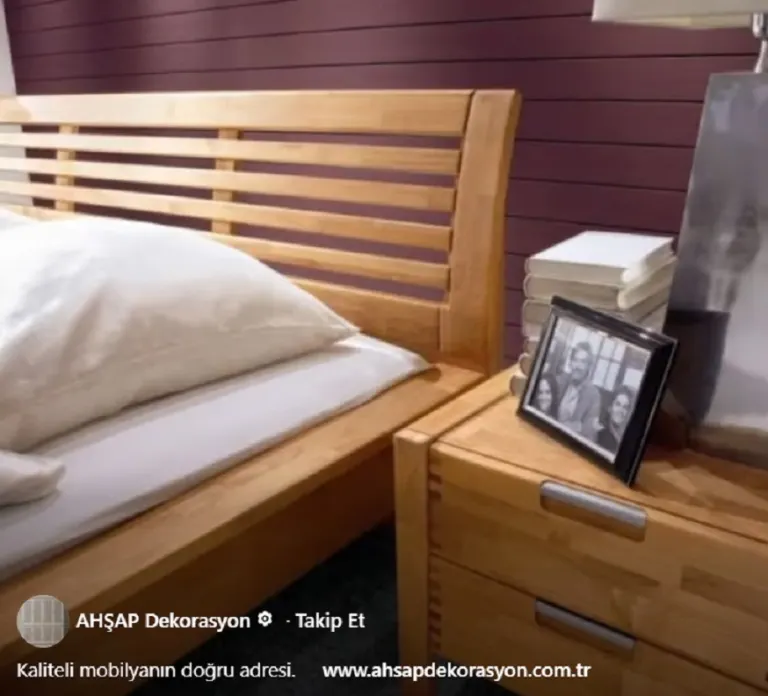
Unlike indoor decorative objects, a distressed-wood bed frame relies on 200 cm to 220 cm solid hardwood side rails, 90 mm to 130 mm laminated bed posts, and wide rustic headboard panels that must remain straight within ±1.5 mm after traversing transoceanic shipping routes from the Black Sea and Aegean to heated winter apartments in Chicago, damp coastal homes in Bristol, or continuously air-conditioned villas in Riyadh.
Backed by Türkiye’s broader furniture manufacturing industry—which generated $4.58 billion to $4.6 billion in net furniture exports in 2025 and sustained strong international shipment momentum across 2026—Türkiye’s premier woodworking clusters in İnegöl, Istanbul, Bolu, Kayseri, and İzmir have invested heavily in pressurized vacuum drying kilns, multi-zone steam equalization chambers, and moisture-barrier container conditioning. For wholesale bedroom importers, technical quality assurance directors, and hospitality supply chain managers, understanding how Turkish engineers eliminate internal casehardening stresses in reclaimed Anatolian chestnut and duty-free imported hardwoods under the Inward Processing Regime (DİR), calibrate desorption schedules to destination indoor Equilibrium Moisture Content (EMC), and prevent "container rain" condensation unlocks a remarkably resilient global supply chain.
1. The Thermodynamic Drying Infrastructure Across Türkiye’s Bedroom Manufacturing Hubs
Evaluating Thermodynamic Kiln Engineering, Hygroscopic Stability, and Global Trade in Turkish Distressed-Wood Bed Frames: Moisture Metrology, Timber Imports, and Maritime Container Physics begins with mapping how Türkiye’s regional clusters manage raw timber conditioning prior to rough milling and mechanical distressing. Because distressed-wood bed frames frequently incorporate character-grade lumber with sound knots, irregular grain slope, and reclaimed heritage beams, improper drying induces severe differential shrinkage, twisting side rails, and delayed post-shipment splitting.
Regional Clusters & Advanced Kiln-Drying Capabilities
1. İnegöl (Bursa): Widely recognized as Türkiye’s solid wood and bedroom furniture capital, İnegöl’s tier-one factories operate on-site computer-controlled conventional hot-air kilns alongside high-speed pressurized vacuum drying kilns (such as Brunner-Hildebrand and WDE-Maspell systems). İnegöl excels at conditioning thick 100 x 100 mm bed post blanks and 220 cm side rails to exact destination EMC targets before planetary wire-brushing and five-axis CNC mortising.
2. Bolu, Kastamonu, and Düzce (Western Black Sea Timber & Phytosanitation Belt): Located directly adjacent to Türkiye’s temperate deciduous forests, primary sawmills and architectural reclamation yards here operate high-temperature phytosanitation sterilization kilns (65°C–75°C core temperature) paired with industrial electromagnetic metal scanners—converting reclaimed Black Sea sweet chestnut (Castanea sativa) and seasoned Anatolian oak (Quercus petraea) into biologically sterile, stress-relieved bed frame stock.
3. Istanbul (Masko, Modoko, Tuzla, Dudullu, and İkitelli): Serving as Türkiye’s commercial design and export headquarters—generating over $3.5 billion in total sectoral exports—Istanbul houses architectural OEM/ODM factories equipped with climate-controlled acclimatization warehouses where incoming imported hardwoods are equalized prior to multi-material assembly with forged iron canopies and upholstered headboard panels.
4. İzmir (Torbalı and Karabağlar) & Aegean Thermal-Wood Corridor: Positioned directly alongside major Aegean deep-water container terminals (Aliağa and Alsancak), İzmir’s export plants utilize superheated steam thermal modification chambers (185°C–212°C pyrolysis) to permanently alter the hygroscopic equilibrium of European ash and Taurus pine for coastal-weathered bed frames.
5. Kayseri: As one of Eurasia’s largest industrial furniture centers, Kayseri’s large-scale conglomerates integrate continuous kiln-drying complexes with automated finger-jointing lines and laminated beech sprung-slat presses—producing high-volume flat-pack distressed bed frames calibrated for European and Middle Eastern distribution.
Turkish Industrial Hub Core Thermodynamic & Conditioning Infrastructure Specialized Timber & Component Processing Primary Destination Climate Corridors
İnegöl (Bursa) Pressurized vacuum kilns (150–200 mbar), reversible cross-shaft kilns Thick bed posts (90–130 mm), 220 cm side rails, headboard panels Continental Europe, UK, North America
Bolu / Kastamonu / Düzce High-temp phytosanitation kilns (65°C–75°C), biomass thermal oil boilers Reclaimed Black Sea chestnut & Anatolian oak beam sterilization Domestic export factories & EU timber ateliers
Istanbul Humidity-regulated acclimatization chambers, precision moisture labs Mixed-material luxury beds (distressed oak/walnut + forged metal/linen) GCC HVAC interiors, USA, Switzerland, France
İzmir / Aegean Belt Oxygen-free thermal steam modification kilns (185°C–212°C pyrolysis) Coastal-weathered ash & cedar bed frames with 45% lower moisture uptake North American coasts, Spain, UK, Nordics
Kayseri Multi-chamber automated drying complexes, high-frequency lamination presses Finger-jointed rails, arched laminated beech sprung bed slats Germany, Romania, Iraq, Israel, North Africa
2. Raw Material Moisture Dynamics: Reclaimed Anatolian Timber vs. Imported Hardwoods
A foundational pillar of Thermodynamic Kiln Engineering, Hygroscopic Stability, and Global Trade in Turkish Distressed-Wood Bed Frames: Moisture Metrology, Timber Imports, and Maritime Container Physics is tailoring drying thermodynamics to the anatomical structure of each timber species.
Conditioning Reclaimed Anatolian Heritage Timbers (Castanea sativa, Cedrus libani, Quercus petraea)
Salvaged structural beams from historic Black Sea chestnut barns and Anatolian farmhouses often sit at 14% to 22% ambient outdoor moisture content and harbor internal drying stresses accumulated over decades of seasonal exposure:
• Thermal Sterilization & Stress Relaxation: Incoming reclaimed beams undergo 100% electromagnetic metal-detector scanning (to extract embedded hand-forged nails) followed by a 48-to-72-hour high-temperature phytosanitation cycle (65°C–75°C core temperature) at high relative humidity. This simultaneously eradicates any dormant wood-boring larvae (Anobium punctatum or Hylotrupes bajulus) without methyl bromide fumigation and softens lignins to relieve historical tension gradients.
• Controlled Desorption to Target EMC: Once sterilized, chamber wet-bulb depression is gradually increased to draw moisture smoothly down to 6.0%–8.0% MC without inducing new radial surface splits.
Re-Equilibrating Imported Kiln-Dried Hardwoods under HS 4407 & DİR Compliance
To manufacture repeatable retail and hospitality bed frame collections with predictable modulus of elasticity (MOE), Turkish factories import kiln-dried lumber under HS Code 4407—including European/Slavonian Oak (Quercus robur — HS 4407.91) from Croatia, Slovenia, Ukraine, and Romania, and American White Oak (Quercus alba) and Ash (Fraxinus americana) graded under National Hardwood Lumber Association (NHLA) standards and imported duty-free under Türkiye’s Inward Processing Regime (DİR) managed by the Turkish Ministry of Trade:
• Eliminating Ocean-Transit Moisture Rebound: Containerized lumber shipped across maritime routes routinely absorbs 1.5% to 2.5% surface moisture in its outer shell (2–4 mm depth). If ripped immediately upon arrival, this moisture gradient causes boards to bow violently. Tier-1 Turkish rough mills hold incoming packs in humidity-regulated equalization chambers for 10 to 14 days, verified via prong stress tests (zero inward pinch) before CNC machining.
• Pressurized Vacuum Drying for Heavy Bed Posts: Solid 100 x 100 mm to 130 x 130 mm bed post blanks are dried in pressurized vacuum kilns (150–200 mbar at 45°C–55°C), lowering water’s boiling point to extract core moisture in 8 to 12 days without surface checking or thermal darkening.
3. Climate-Zone Equilibrium Moisture Content (EMC) & Thermal Wood Modification
In Thermodynamic Kiln Engineering, Hygroscopic Stability, and Global Trade in Turkish Distressed-Wood Bed Frames: Moisture Metrology, Timber Imports, and Maritime Container Physics, factories calibrate final wood moisture content specifically to the indoor psychrometric profile of the importing country:
Export Destination Climate Zone Typical Indoor Temp & Relative Humidity (RH) Target Core Moisture Content (MC) at Stuffing Engineering & Structural Protection Outcome
North America (USA & Canada — Heated/Cooled Homes) 20°C–22°C / 35%–42% RH 6.5% – 7.5% MC (±0.5% shell-to-core) Prevents winter heating shrinkage cracks in wide headboard panels & side-rail splits
United Kingdom & Northern/Western Europe 18°C–21°C / 45%–55% RH 7.5% – 8.5% MC (±0.5% shell-to-core) Prevents summer humidity swelling and binding of steel hook-in rail brackets
Gulf Cooperation Council (Saudi Arabia, UAE, Qatar) 21°C–23°C / 28%–35% RH (Continuous HVAC) 5.5% – 6.5% MC (±0.5% shell-to-core) Eliminates extreme arid shrinkage in oversized 200x220 cm super-king bed frames
Coastal Resorts & Semi-Outdoor Tropical Suites 24°C–28°C / 65%–80% RH Thermally Modified Ash/Pine (185°C–212°C) Permanently lowers wood EMC by 45%; EN 350 Class 1–2 rot & warp resistance
Acoustic-Silent Hardware & Textile-Safe Texturing Integration
Once calibrated to destination EMC, bed components undergo 304 stainless-steel planetary wire-brushing (0.8–1.8 mm tactile relief) and fine Tynex® nylon denibbing (guaranteeing zero snags on 400-thread-count cotton or silk sheets), followed by reactive patina treatments (closed-loop ammonia vapor fuming, buffered iron-acetate washes, or cerused lime-waxing) and GREENGUARD Gold certified zero-VOC hardwax oils or 2K waterborne dead-matte polyurethanes (4–7 GU). Side rails are fitted with 3.5 mm steel hook-in rail brackets, M8 metric cross-dowel barrel bolts (Rampa® steel inserts), and EPDM rubber acoustic slat gaskets—ensuring squeak-free performance across EN 1725 structural load cycles.
4. Maritime Container Psychrometrics: Preventing "Container Rain" Condensation
Even a perfectly kiln-dried distressed-wood bed frame can be ruined during a 20-day sea voyage if maritime container psychrometrics are neglected. In Thermodynamic Kiln Engineering, Hygroscopic Stability, and Global Trade in Turkish Distressed-Wood Bed Frames: Moisture Metrology, Timber Imports, and Maritime Container Physics, export logistics teams enforce strict container-stuffing protocols:
1. Container Timber Floor & Dew-Point Inspection: Prior to loading at Gemlik, Ambarlı (Istanbul), or Aliağa (İzmir), quality engineers inspect the 40-foot High Cube container for pinhole roof leaks, rubber door-gasket integrity, and container wood-floor moisture content (rejecting any container whose floor exceeds 12% MC).
2. Hermetic Vapor-Barrier Micro-Packaging: Individual headboard panels, side rails, and bed posts are heat-sealed inside 150-micron virgin polyethylene vapor-barrier bags containing food-grade bentonite clay / silica gel desiccant sachets, packed inside 275-lb burst-strength 5-ply double-wall kraft cartons with 35 kg/m³ closed-cell EPE foam edge guards validated to ISTA 3A drop standards.
3. High-Capacity Calcium Chloride Container Desiccant Poles: Twelve to sixteen 1.5 kg calcium chloride desiccant poles (capable of absorbing up to 300% of their own weight in atmospheric water vapor and locking it into a non-spill gel) are suspended along the container’s upper corrugation recesses—preventing warm, humid maritime air from condensing on cold steel container ceilings ("container rain") during day-to-night temperature swings.
4. ISPM-15 Heat-Treated Pallets: All wooden export pallets undergo chemical-free ISPM-15 heat treatment (56°C core temperature for 30 minutes) and carry official IPPC certification stamps.
5. Global Export Corridors, Customs Classification, and EUDR Compliance
Türkiye’s strategic proximity to Europe, North America, and the Middle East minimizes ocean transit duration—further reducing hygroscopic exposure for exporters specializing in Thermodynamic Kiln Engineering, Hygroscopic Stability, and Global Trade in Turkish Distressed-Wood Bed Frames: Moisture Metrology, Timber Imports, and Maritime Container Physics:
• HS Code 9403.50.00: Wooden furniture of a kind used in the bedroom (covers distressed solid wood bed frames, canopy beds, platform frames, and headboard assemblies).
• European Union (0% Duty via A.TR Certificate & 5–7 Day Overland Transit): Under the EU-Türkiye Customs Union, finished distressed-wood bed frames enter all 27 EU member states duty-free when accompanied by an A.TR Movement Certificate, traveling via insulated Euro-6 TIR trucks to Germany, France, the Netherlands, and Italy in 5 to 7 days.
• United Kingdom (0% Duty via EUR.1 Certificate): Governed by the UK-Türkiye Free Trade Agreement, British bedroom importers receive zero-tariff entry and 14-to-18-day short-sea container transit to Felixstowe or London Gateway.
• United States & Canada: Direct ocean transit from Istanbul or İzmir to New York, Savannah, Houston, and Montreal takes 16 to 24 days—nearly half the transit time of East Asian shipments—while insulating North American buyers from punitive tariffs on Chinese wooden bedroom furniture.
• EU Deforestation Regulation (EUDR) & Reclaimed Wood Compliance: Under Regulation (EU) 2023/1115 (EUDR), Turkish exporters provide complete GPS forest harvest polygon coordinates and FSC Mix Credit / FSC 100% Chain-of-Custody license numbers for fresh hardwoods—or compile comprehensive Reclaimed Provenance Audit Dossiers (salvage purchase records, dated pre-milling batch logs, and thermal kiln sterilization charts) for 100% salvaged Anatolian wood bed frames.