Manufacturing Mastery and Global Trade: The Production, Import, and Export of Solid Wood Tables and Coffee Tables in Turkey
Türkiye has evolved from a regional woodworking workshop into an indispensable powerhouse in the global furniture supply chain. Positioned at the crossroads of Europe, Central Asia, and the Middle East, the Turkish solid wood furniture industry merges deep-rooted Anatolian joinery heritage with automated Industry 4.0 CNC machining, computerized vacuum kiln-drying, and agile multimodal logistics. For international retail buyers, architectural procurement directors, customs brokers, and timber industrialists, mastering the production, import, and export of solid wood tables and coffee tables in Turkey unlocks substantial competitive advantages in unit economics, lead-time velocity, and bespoke craftsmanship.
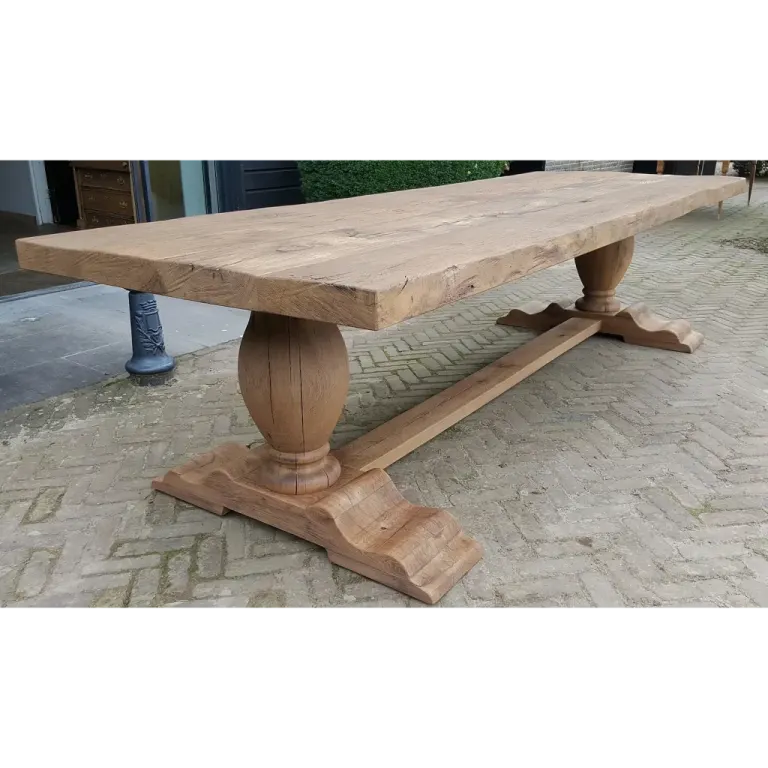
Unlike mass-market flat-pack furniture engineered from melamine-faced chipboard (MFC) or medium-density fiberboard (MDF), solid hardwood dining tables, coffee tables, nesting tables, and console tables represent high-margin, heirloom-grade assets. Navigating this ecosystem successfully requires granular technical knowledge across forestry procurement, moisture engineering, Turkish customs tariff schedules (GTİP), Additional Customs Duties (İGV), and European Union Deforestation Regulation (EUDR) traceability.
1. Industrial Geography: Türkiye’s Solid Wood Manufacturing Hubs
The backbone of the production, import, and export of solid wood tables and coffee tables in Turkey is a network of specialized, vertically integrated industrial clusters. Rather than relying on isolated factories, Turkish production thrives on dense regional ecosystems where timber merchants, kiln-drying plants, metal leg foundries, resin formulators, and international freight forwarders operate within minutes of each other.
İnegöl (Bursa): The Capital of Solid Wood Table Manufacturing
Located in northwestern Türkiye near the Sea of Marmara ports of Gemlik and Istanbul, İnegöl accounts for roughly 40% to 45% of Türkiye’s total furniture exports.
• Specialization: Solid Anatolian walnut (Juglans regia), Oriental beech (Fagus orientalis), and European oak (Quercus) dining tables, live-edge epoxy river tables, and contemporary minimalist coffee tables.
• Infrastructure: Home to the İnegöl Furniture Organized Industrial Zone (İMOS) and specialized timber processing parks, enabling rapid prototyping and high-volume container consolidation.
Ankara (Siteler): Artisanal Joinery and Architectural Fit-Out
Siteler in Ankara is one of the largest traditional woodworking complexes in Europe and the Middle East, housing thousands of small-to-medium workshops alongside large export factories.
• Specialization: Complex architectural joinery, hand-carved classic dining tables, custom hospitality (HORECA) contract furniture, and intricate inlay or parquetry tabletops.
• Agile Customization: Siteler excels at low-MOQ (Minimum Order Quantity) bespoke runs for boutique European designers and luxury Gulf residential palaces.
Kayseri: High-Capacity Industrial Automation
Known historically for large-scale upholstered and panel furniture, Kayseri has invested heavily in automated solid wood milling lines and robotic finishing booths.
• Specialization: Standardized, high-volume solid beech and oak dining table sets and flat-pack coffee tables tailored for major European and North American retail chains.
Istanbul (Modoko, Masko, and Tuzla/İkitelli Industrial Zones)
Istanbul serves as both the commercial showroom capital and a premier hub for luxury designer tabletops combining solid wood with brushed brass, stainless steel, and natural marble. Proximity to Ambarlı and Haydarpaşa ports makes Istanbul the primary gateway for imported exotic hardwoods and outbound LCL (Less than Container Load) consolidated shipments.
2. Timber Sourcing and Wood Science in Turkish Production
High-caliber manufacturing begins long before a slab enters a CNC router. The structural integrity of any solid wood table depends on species selection, legal forestry harvesting, and precision moisture conditioning.
Domestic vs. Imported Timber Species
Turkish factories utilize a strategic blend of domestic state-managed timber and imported hardwoods:
• Anatolian Walnut (Juglans regia): Prized globally for its rich chocolate-brown heartwood, dramatic cathedral grain, and natural burl formations. Harvested primarily from private orchards and managed agricultural lands in regions like Kahramanmaraş, Bursa, and Tokat, making it highly prized for live-edge dining and coffee tables.
• Oriental Beech (Fagus orientalis): Abundant in the Black Sea region (Bolu, Düzce, Bartın, Trabzon) and managed via auctions held by the Turkish General Directorate of Forestry (Orman Genel Müdürlüğü - OGM). Steamed Turkish beech offers exceptional hardness, uniform grain, and superior steam-bending capability for curved table aprons and legs.
• Turkish & European White Oak (Quercus petraea / Quercus robur): Sourced both domestically from Thrace/Black Sea forests and imported from Ukraine, Romania, and France. White oak is the top choice for Scandinavian and modern organic coffee tables due to its closed-pore water resistance and receptivity to matte hardwax oils.
• Imported Exotic & North American Hardwoods: Turkish timber importers bring in American Black Walnut (Juglans nigra) and Ash (Fraxinus) for uniform color grading, alongside African Iroko and Sapele for outdoor garden tables and yacht-grade furniture.
Kiln-Drying Protocols and Equilibrium Moisture Content (EMC)
Wood is an anisotropic, hygroscopic material that shrinks and swells radially and tangentially as ambient relative humidity changes. A table built in humid coastal Türkiye without precision kiln-drying will warp, cup, or split when placed in a heated apartment in Berlin, New York, or Riyadh.
1. Air-Drying Stage: Freshly sawn 5 cm to 8 cm thick hardwood boules (flitches) are stickered and air-dried for 6 to 18 months to bring moisture content from green (~50%–70%) down to fiber saturation (~25%–30%).
2. Computerized Kiln & Vacuum Drying: Timber is loaded into automated conventional kilns or high-frequency vacuum kilns where temperature, relative humidity, and airflow are regulated over 15 to 45 days.
3. Target Export Moisture Content: Leading factories in the production, import, and export of solid wood tables and coffee tables in Turkey dry lumber strictly to 8% ± 1% MC for North American, European, and Middle Eastern indoor destinations, and 10% to 12% MC for coastal or outdoor applications.
4. Conditioning & Stress Relief: At the end of the kiln cycle, a high-humidity conditioning phase equalizes core-to-shell moisture gradients, eliminating casehardening so boards do not twist when resawn or planed.
3. Production Engineering: From Raw Slab to Export-Ready Table
Modern Turkish factories follow a rigorous multi-stage engineering workflow to guarantee dimensional stability and repeatability across container-load orders.
Stage 1: Lumber Grading, Ripping, and Stave Matching
Kiln-dried boards are scanned for knots, sapwood, and pith defects. For glued-up solid wood tabletops, manufacturers cut timber into staves (typically 7 cm to 12 cm wide) and alternate growth-ring orientation (bark-side up, bark-side down) to neutralize seasonal cupping forces. For full-length stave luxury tables, staves run continuously from end to end without finger joints.
Stage 2: Structural Adhesive Bonding (EN 204 D3/D4)
Staves are jointed to zero-gap tolerances and pressed in hydraulic high-frequency (HF) or cold-clamp presses using EN 204 D3 or D4 water-resistant PVA adhesives or one-component moisture-curing polyurethane (PUR) glues. Unlike standard interior glues, D4 and PUR adhesives withstand extreme heat (up to 60°C inside steel shipping containers crossing the Red Sea or Mediterranean in summer) without creep or delamination.
Stage 3: Anti-Warp Mechanical Stabilization
Wide solid wood slabs (90 cm to 130 cm wide) naturally expand across the grain by 3 mm to 8 mm between winter and summer. Turkish engineers incorporate three primary stabilization mechanisms:
• Recessed Steel C-Channels: Powder-coated U- or C-profile steel bars (typically 40x20x3 mm) are routed flush into the underside of the tabletop, fastened via threaded inserts and elongated slotted holes that allow lateral wood movement while preventing longitudinal bowing.
• Sliding Dovetail Battens: Traditional all-wood hardwood battens tapered into dovetail grooves beneath the slab.
• Figure-8 Fasteners & Z-Clips: Used to attach solid wood tabletops to aprons or steel pedestals so the top floats independently of the base.
Stage 4: 5-Axis CNC Machining and Precision Sanding
5-axis CNC machining centers execute Swiss-edge (chamfered) profiles, butterfly bow-tie inlays, mortise-and-tenon leg joinery, and recessed hardware pockets with ±0.1 mm repeatability. Surfaces are then calibrated through wide-belt sanders progressing through 80, 120, 180, and 240 grit abrasives, followed by orbital hand-sanding to eliminate cross-grain scratches before finishing.
Stage 5: Industrial Finishing Systems
• Zero-VOC Hardwax Oils (Rubio Monocoat, Osmo, Woca): Applied via automated roller-coaters or hand-buffing machines. Preferred by EU and US buyers for natural tactile warmth, certified food-contact safety (EN 71-3), and easy consumer spot-repair.
• 2K Polyurethane (PU) & Waterborne Acrylics: Applied in pressurized, dust-free spray booths for high-traffic restaurant tables and Middle Eastern luxury interiors requiring maximum resistance to heat, coffee stains, and alcohol.
Stage 6: Mechanical Durability Testing (EN 12521)
Export-oriented Turkish factories test prototypes against EN 12521 (European standard for domestic table strength, durability, and stability), verifying horizontal static load capacity, vertical impact resistance, and leg fatigue cycles.
4. Customs Classification: GTİP and HS Codes in Türkiye
Every cross-border transaction involving the production, import, and export of solid wood tables and coffee tables in Turkey relies on accurate classification under the 12-digit Turkish Customs Tariff Schedule (Türk Gümrük Tarife Cetveli - GTİP).
GTİP Code Official Classification Description Covered Table & Coffee Table Types
9403.60.10.00.00 Wooden furniture of a kind used in the dining room and living room Solid wood dining tables, coffee tables, center tables, nesting tables, end tables, console tables
9403.30.11.00.00 Wooden furniture of a kind used in offices (height ≤ 80 cm) – Desks Executive solid wood office desks, writing tables
9403.30.19.00.00 Wooden furniture of a kind used in offices (height ≤ 80 cm) – Other Office lounge coffee tables, low wooden meeting side tables (≤ 80 cm height)
9403.30.91.00.00 Wooden furniture of a kind used in offices (height > 80 cm) High conference tables, standing wooden reception tables
9403.60.90.00.00 Other wooden furniture (not elsewhere specified) Solid teak/iroko outdoor garden tables, hallway tables not strictly dining/living
9403.91.00.00.00 Parts of furniture, of wood Unfinished or finished solid wood tabletops, live-edge slabs, turned wooden legs sold separately
Navigating Hybrid Material Classifications (GRI 3b)
Contemporary coffee tables frequently pair a solid wood top with structural steel frames, tempered glass tiers, or marble plinths. Under General Rule for the Interpretation of the Harmonized System (GRI) 3(b), customs authorities classify composite furniture according to the component imparting its essential character (evaluated by surface area, weight, value, and functional role).
• A dining table with a 4.5 cm solid walnut slab and steel spider legs is classified under 9403.60.10.00.00 because the wood defines the product.
• A glass-topped coffee table resting on a minor wooden base may be reclassified under 9403.89 (furniture of other materials). Importers and exporters handling complex mixed-media designs should secure a Binding Tariff Information (Bağlayıcı Tarife Bilgisi - BTB) ruling from the Turkish Ministry of Trade to prevent retroactive duty disputes.
5. Exporting Solid Wood Tables from Türkiye: Compliance & Documentation
Türkiye provides an export-friendly fiscal environment: zero export customs duties, 0% export VAT, and streamlined VAT refunds on domestic timber, hardware, and energy inputs. However, compliance with destination-market regulations is strict.
Core Export Document Package
1. Commercial Invoice (Ticari Fatura): Details unit prices, currency, Incoterms (EXW, FOB Gemlik/Ambarlı, CIF, DDP), 12-digit GTİP codes, botanical species names, and net/gross weights.
2. Packing List (Çeki Listesi): Breaks down carton counts, dimensions, CBM, and component mapping (e.g., Box 1 of 2: Tabletop; Box 2 of 2: Legs & Hardware).
3. Preferential Origin Certificates:
• A.TR Movement Certificate: Used for exports to the European Union under the EU-Türkiye Customs Union. Grants 0% import tariff on industrial goods in free circulation in Türkiye (even if the raw lumber was imported from the US or Ukraine and processed in Türkiye).
• EUR.1 Movement Certificate / Approved Exporter Invoice Declaration: Used for Free Trade Agreement partners (United Kingdom, EFTA states, South Korea, Balkans, etc.). Requires strict compliance with Rules of Origin—proving sufficient value-added manufacturing occurred in Türkiye.
• Certificate of Origin (Menşe Şahadetnamesi): Required for non-FTA markets such as the United States, Canada, UAE, Saudi Arabia, and Iraq.
4. Transport Waybills: Bill of Lading (sea), CMR (international trucking), or Air Waybill.
EU Deforestation Regulation (EUDR) Due Diligence
For exporters shipping solid wood tables into the European Union, full compliance with Regulation (EU) 2023/1115 (EUDR) is mandatory across Chapter 94 wooden furniture:
• Plot-Level Geolocation: Exporters must supply EU operators with exact GPS coordinates (latitude/longitude polygons for plots > 4 hectares) of the forest parcels where the wood was harvested, plus harvest dates.
• Legality & Zero-Deforestation Proof: Documentation proving the timber was harvested after December 31, 2020, without deforestation or forest degradation, backed by Turkish General Directorate of Forestry (OGM) transport permits (Nakliye Tezkeresi) or verified foreign import customs declarations.
• FSC / PEFC Chain of Custody: Maintaining active FSC (Forest Stewardship Council) or PEFC certification provides standardized batch segregation and audit trails that streamline EUDR due diligence reporting for European retail buyers.
6. Importing Solid Wood Tables into Türkiye: Taxes, Tariffs, and Controls
Despite Türkiye’s massive domestic production capacity, Turkish luxury retailers, architectural firms, and hotel developers import distinctive solid wood tables—primarily tropical hardwoods (Indonesian teak, Indian mango and acacia, Vietnamese rubberwood/ash) and high-end European designer pieces (Italian and Danish solid oak).
Landed Cost and Tax Architecture in Türkiye
Türkiye protects its domestic woodworking sector through multi-tiered import duties. Importers must model four cumulative fiscal layers:
1. Base Customs Duty (Gümrük Vergisi):
• EU (with A.TR) & FTA Partners (with EUR.1): 0%.
• Non-FTA Third Countries (China, India, Indonesia, Vietnam, USA): 0% to 5.6% depending on the exact GTİP subheading.
2. Additional Customs Duty (İlave Gümrük Vergisi - İGV):
• Levied on non-EU/non-FTA imports under Chapter 94 to shield domestic manufacturers. For wooden dining and coffee tables, İGV rates typically range from 15% to 25% of the CIF value (and up to 50% on certain protected lines).
• Critical EU Transshipment Rule: If a Turkish importer buys a Vietnamese-made teak coffee table from a wholesaler in the Netherlands using an A.TR certificate without EU preferential origin proof, Turkish customs still assesses İGV based on the non-preferential country of origin (Vietnam).
3. Value Added Tax (Katma Değer Vergisi - KDV):
• Standard KDV is 20%, calculated cumulatively on:
\(\text{KDV\ Base}=\text{CIF\ Value}+\text{Customs\ Duty}+\text{İGV}+\text{Port/Customs\ Clearance\ Expenses}\)
4. KKDF (Resource Utilization Support Fund):
• If payment is made on deferred terms (cash against goods / mal mukabili or acceptance L/C) rather than advance cash transfer (peşin) or irrevocable sight L/C, a 6% KKDF surcharge applies to the CIF value.
Phytosanitary, CITES, and TAREKS Inspections
• Phytosanitary Certificate (Bitki Sağlık Sertifikası): Mandatory for semi-finished wooden tabletops (9403.91) and rustic/bark-on live-edge tables to verify the absence of quarantine wood-boring insects and fungal pathogens. Inspected at the port of entry by the Ministry of Agriculture and Forestry.
• CITES Permits: Any coffee table crafted from CITES-listed endangered species (e.g., Dalbergia rosewoods, genuine Swietenia mahogany, or protected tropical hardwoods) requires valid export and Turkish import CITES certificates prior to vessel loading.
• TAREKS & KKDİK (Turkish REACH): Electronic risk-based product safety clearance verifying that surface coatings, wood preservatives, and glues comply with Turkish limits on heavy metals (lead, cadmium) and restricted chemicals.
7. Packaging Engineering, ISPM-15, and Container Load Optimization
Solid wood tables are dense, heavy, and vulnerable to edge crushing and moisture condensation during ocean transit.
Drop-Tested Packaging Architecture (ISTA 2A / 3A)
• SKD (Semi-Knocked-Down) Configuration: Over 90% of export dining and coffee tables ship with detached legs/bases. Top and base cartons are paired with clear SKU barcodes, reducing cubic freight volume by up to 70%.
• Multi-Barrier Cushioning: Non-abrasive EPE micro-foam wrap prevents finish imprinting; high-density EPS foam corner blocks and L-profile edge guards absorb drop shocks; double-wall (BC-flute) or triple-wall kraft cartons (250–275 lbs burst strength) protect against stacking compression.
• Container Desiccants: High-absorption calcium chloride desiccant poles are suspended along container walls to prevent "container rain" (condensation) caused by day-night temperature swings at sea.
ISPM-15 Wood Packaging Compliance
Under ISPM-15, all solid wood pallets, crates, and dunnage used in international shipping must undergo Heat Treatment (HT) (core temperature ≥ 56°C for at least 30 minutes) and display the official IPPC stamp. Crates constructed entirely from engineered wood (plywood, OSB, MDF) are exempt from ISPM-15 heat-treatment rules, making plywood crating standard for fragile live-edge resin tables.
Container Capacity Benchmarks
• 20ft Standard Container (~28–30 CBM usable): Holds 35 to 55 KD solid wood dining tables (180–220 cm length) or 120 to 180 KD solid wood coffee tables.
• 40ft High Cube Container (~65–68 CBM usable): Holds 85 to 125 KD solid wood dining tables or 280 to 400 KD solid wood coffee tables, depending on slab thickness (3 cm to 5 cm) and protective foam thickness.
8. B2B Contracting, Trade Finance, and Risk Mitigation
Executing high-value transactions across the production, import, and export of solid wood tables and coffee tables in Turkey requires disciplined financial and quality-assurance safeguards:
1. Incoterms Selection:
• FOB (Free on Board – Gemlik, Ambarlı, İzmir, Mersin): Preferred by experienced international buyers who control their own ocean freight contracts and marine insurance.
• CIF / CFR: Common for Middle Eastern and emerging-market buyers relying on Turkish forwarders.
• DDP (Delivered Duty Paid): Increasingly utilized by Turkish exporters supplying European e-commerce brands via overland TIR trucks.
2. Payment Instruments:
• T/T (Telegraphic Transfer): Standard 30%–40% advance deposit to fund raw timber procurement, with the 60%–70% balance payable upon clean Pre-Shipment Inspection (PSI) report and copy of the Bill of Lading.
• Irrevocable Letter of Credit (L/C) at Sight: Recommended for first-time container orders exceeding $50,000, eliminating counterparty default risk for both buyer and Turkish manufacturer.
3. Third-Party Pre-Shipment Inspection (PSI):
• Inspectors verify random samples across 100% finished production: pinless moisture readings (verifying 8%–10% MC), tabletop flatness tolerances (< 2 mm deviation over a 2-meter straightedge), joinery stability, finish gloss consistency, and carton drop tests before container sealing.