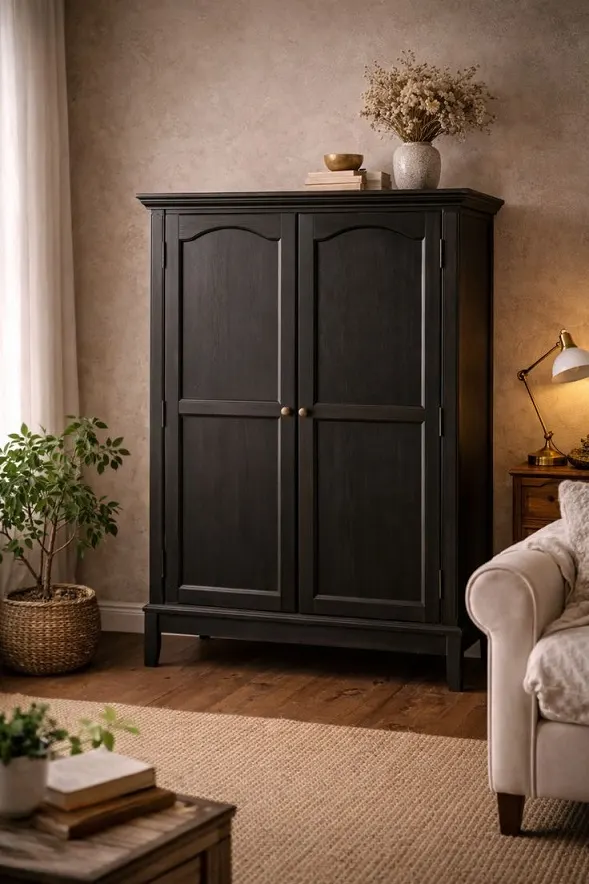
Bedroom Wardrobe Doors for Hotels: Sliding vs Hinged Systems and Guest Room Space
Sliding and hinged wardrobe doors behave very differently in a guest room. This guide compares them on space use, noise at night and how often they need repair.
When you compare hotel wardrobe sliding vs hinged doors, three questions decide most projects: how much floor space the door takes, how much noise it makes at 2 a.m., and how often engineering will be called to fix it. Style matters, but these three factors drive daily operation and long-term cost. This article looks at the two systems only through that lens.
The short answer: sliding doors save swing space but add track maintenance and a narrower opening, while hinged doors give full access and a simpler mechanism but need clear floor area. The right choice depends on the room width, the wardrobe position and how much service you expect from the doors.
Space use: what each door really costs you
Hinged doors and swing clearance
A hinged door needs an arc of free floor equal to its width. A 500 mm (19.7 in) door needs roughly 500 mm of clear space in front of it when fully open. In a narrow room, that arc can collide with the bed end, a luggage bench, a desk chair or the bathroom door.
Plan hinged wardrobe door clearance on the room layout, not only on the elevation. Check these points:
- The door opens fully, ideally to 110 degrees or more, without hitting a bed or bedside table.
- Two open doors do not block the passage between bedroom and entrance.
- A guest can stand in front of the wardrobe with a door open and still pass a second person.
- Door handles do not strike adjacent walls, columns or other joinery.
Sliding doors and the loss of opening width
A sliding wardrobe in a hotel room needs no swing area, which is a clear advantage in compact rooms or where the wardrobe faces the bed at close range. The trade-off is access: with two sliding leaves, only about half of the wardrobe width is open at any time. With three leaves, it is about two thirds.
Sliding systems also need depth for the track and for the overlapping leaves, which usually reduces internal usable depth by a few centimetres. Ask for the exact internal clear depth in the shop drawing, because it affects whether standard hangers sit square to the door line.
Quick space comparison
| Factor | Hinged | Sliding |
|---|---|---|
| Floor space in front | Needs swing arc | None |
| Open access to interior | Full width | Partial (about 50-67%) |
| Internal depth | Maximum | Slightly reduced by track |
| Best for | Wider rooms, corridor-free fronts | Tight rooms, bed close to wardrobe |
Noise at night: where guests actually notice
Guest room wardrobe door noise is rarely a complaint in a sample room and often one in an occupied hotel. Guests who return late or leave early open and close wardrobes while a partner sleeps. Housekeeping also opens every wardrobe daily.
Noise sources in hinged doors
- Closing impact: a door that slams against the carcass is the most common source. Soft-close hinges or dampers reduce this considerably.
- Hanger rattle: not a door issue as such, but a door that closes hard makes hangers ring.
- Magnetic or touch latches: a weak latch can click or let the door drift open.
Noise sources in sliding doors
- Rolling noise: low-quality rollers or dirty tracks produce a rumble that carries through the room.
- End stops: without dampers, a leaf bangs at the end of travel.
- Door-to-door contact: poorly aligned leaves rub or knock.
Both systems can be made quiet. A well-specified sliding system with soft-stop dampers is quieter than a hinged door with cheap hinges, and the reverse is also true. The difference is that hinged noise is usually fixed by replacing a hinge or adjusting a damper, while sliding noise often points to track contamination or worn rollers that need recurring attention.
Repair frequency: what engineering teams deal with
Repair load is where the two systems diverge most over several years. We do not quote failure rates, because they depend on hardware quality, door weight, occupancy and cleaning habits. The failure patterns, however, are consistent.
Typical hinged door issues
- Door sag or misalignment when the door is tall, heavy or fitted with too few hinges.
- Loosened hinge screws in board edges after repeated use.
- Damper wear in soft-close hinges.
- Guests leaning on or swinging from open doors.
Most of these are cured by a screwdriver adjustment. Hinged hardware is easy to replace, and replacement parts are generally easy to source.
Typical sliding door issues
- Debris, dust and lint in the bottom track that increase friction and noise.
- Worn or damaged rollers, especially on heavy mirror or glass leaves.
- Doors jumping off the track when forced or lifted.
- Bent or damaged top rails after rough handling.
Sliding repairs are less frequent on light, well-built systems but can take longer when they occur, because leaves often need to be lifted out and the track cleaned or replaced. Specify top-hung systems with a robust rail if the leaves are heavy, and keep spare rollers in the OS&E stock.
Matching the door type to the room
Instead of choosing one system for the whole hotel, decide by room type and layout.
- Compact rooms (around 18 m² (194 sq ft) or less): sliding doors usually protect circulation space, provided the opening width is acceptable for the stay length.
- Standard rooms with a wardrobe in an entrance lobby: hinged doors work well because the swing area is shared with the entry corridor.
- Suites and larger rooms: hinged doors give full access and feel more upscale, and space is rarely the limiting factor.
- Long-stay or serviced rooms: full access favours hinged doors, since guests use the storage more intensively.
- Rooms with mirrors on the doors: check door weight carefully; mirror leaves load both hinges and rollers.
Specification points that reduce problems
Whichever system you choose, the following details make a visible difference after the first year of operation:
- State the door weight and size limits in the specification, not just the hardware brand or type.
- Ask for soft-close or soft-stop on every door, and test it in the mock-up room.
- Keep door widths moderate. Very wide hinged leaves are more prone to sag and warp.
- Request a sample section or the full mock-up wardrobe so that housekeeping and engineering can try the doors before production.
- Agree a maintenance note, including track cleaning for sliding systems, as part of the handover documents.
Which option should you choose?
If floor space is tight and the wardrobe sits close to the bed, sliding doors are often the practical answer, as long as you accept partial access and plan for track cleaning. If the room has space, or if you want simple, repairable hardware and full access to hanging areas, hinged doors are usually the safer long-term choice.
Many hotels use a mix: hinged doors in standard rooms and suites, sliding doors only in the compact room types where swing clearance would be a problem. This also keeps spare parts manageable, as long as the number of door systems stays small.
Next step
We produce wardrobes with both sliding and hinged systems to project drawings in our Istanbul factory and supply hotels worldwide. If you send us your room layout or wardrobe elevations, we will review the clearances, suggest a door system for each room type and provide a project quotation.
Sıkça Sorulan Sorular
Are sliding wardrobe doors better for small hotel rooms?
Often yes, because they need no swing area and protect circulation space near the bed or desk. The trade-off is partial access to the wardrobe interior and track maintenance. Check the opening width against the expected stay length and luggage use before deciding.
How much clearance does a hinged wardrobe door need?
As a rule, the clear floor area in front must be at least equal to the door width, so a 500 mm (19.7 in) leaf needs about 500 mm to open fully. Also check that open doors do not hit beds, chairs or the bathroom door.
Which wardrobe door type is quieter at night?
Neither is quieter by nature. Hinged doors are quiet with soft-close hinges, and sliding doors are quiet with good rollers and soft-stop dampers. Poor hardware or dirty tracks cause most noise complaints, so test doors in the mock-up room.
Which system needs more repairs in a hotel?
Hinged doors tend to need quick adjustments such as hinge tightening or damper replacement. Sliding doors need less frequent but sometimes longer repairs, such as track cleaning or roller replacement. Hardware quality, door weight and housekeeping routines matter more than the system alone.
Can you mix sliding and hinged wardrobe doors in one hotel?
Yes. Many projects use sliding doors in compact room types and hinged doors in standard rooms and suites. Keep the number of door systems limited so spare parts and maintenance routines stay simple for the engineering team.
Can Palmiye supply wardrobe doors to hotels outside Turkey?
Yes. We manufacture to project drawings in Istanbul and ship worldwide. Send your room layouts or elevations, and we will advise on door systems, packing and delivery terms for your destination.
Every hotel project is different. Send us your drawings or room schedule for a tailored proposal on materials, lead time and shipping.