
Export and Import of Kitchen and Bathroom Cabinets: Global Trade Compliance, HS Tariff Engineering, Moisture-Safe Logistics, and International Procurement Standards
The Export and Import of Kitchen and Bathroom Cabinets represents one of the fastest-growing segments in global architectural millwork and construction material trade. Driven by multi-family residential developments, luxury hospitality renovations, and wholesale showroom distribution across North America, the European Union, the United Kingdom, and the Gulf Cooperation Council (GCC), international developers increasingly source turnkey wet-zone joinery from specialized manufacturing hubs such as Türkiye, Italy, Germany, Spain, and Southeast Asia.
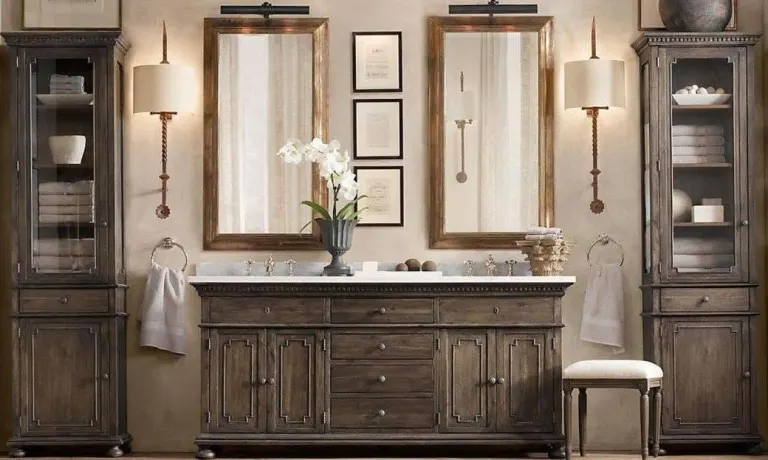
However, navigating the Export and Import of Kitchen and Bathroom Cabinets involves far greater regulatory and logistical complexity than shipping standard dry-zone living room or bedroom furniture. Because kitchen cabinetry and bathroom vanities combine composite wood substrates, catalyzed chemical coatings, integrated stone or solid-surface basins, metallic motion hardware, and occasionally pre-wired LED lighting drivers, cross-border shipments are scrutinized under strict Harmonized System (HS) tariff rules, formaldehyde emission statutes, deforestation traceability mandates, and ocean-freight humidity controls. This comprehensive technical guide examines every legal, engineering, and logistical requirement governing the Export and Import of Kitchen and Bathroom Cabinets.
1. Harmonized System (HS) Tariff Classifications: Kitchen vs. Bathroom Cabinetry
One of the most frequent—and costly—errors in the Export and Import of Kitchen and Bathroom Cabinets occurs during customs classification. Under World Customs Organization (WCO) nomenclature, fitted kitchen cabinets and bathroom vanities do not share the same six-digit HS heading, even when manufactured from identical green-core High Moisture Resistant (HMR) MDF and finished in the exact same polyurethane lacquer.
Core WCO HS Codes for Cross-Border Trade
Product Category 6-Digit WCO HS Code Common National Tariff Subheadings Customs Scope & Technical Classification Criteria
Wooden Kitchen Furniture (Fitted & Modular) 9403.40 • USA (HTSUS): 9403.40.9060
• EU (CN): 9403.40.10 / 9403.40.90
• Türkiye (GTİP): 9403.40.10.00.00 Base cabinets, wall units, tall pantry towers, and island modules specifically designed for permanent kitchen installation (shipped flat-pack RTA or rigid pre-assembled).
Bathroom Vanities & Other Wooden Furniture 9403.60 • USA (HTSUS): 9403.60.8081
• EU (CN): 9403.60.90
• Türkiye (GTİP): 9403.60.90.00.00 Floor-standing or wall-hung floating bathroom vanities, linen towers, and medicine cabinets constructed primarily of wood, MDF, or plywood.
Plastic / PVC Foam Bathroom Cabinets 9403.70 • USA (HTSUS): 9403.70.8015
• EU (CN): 9403.70.00 100% waterproof WPC (Wood-Plastic Composite) or high-density PVC foam board bathroom vanities used in wet rooms and commercial spas.
Wooden Cabinet Doors, Fronts & Parts 9403.91 • USA (HTSUS): 9403.91.0080
• EU (CN): 9403.91.00
• Türkiye (GTİP): 9403.91.00.00.00 Standalone CNC-routed cabinet doors, drawer fronts, end panels, and toe-kicks exported separately from cabinet boxes.
Ceramic, Porcelain & Quartz Vanity Basins 6910.10 / 6810.99 • USA (HTSUS): 6910.10.0030 (Porcelain)
• 6810.99.0080 (Agglomerated Quartz) Undermount or integrated washbasins and stone countertops bundled with bathroom vanities (must be itemized separately if not permanently bonded).
Composite Goods and "Essential Character" Rules (GRI 3b)
When exporting turnkey bathroom vanities bundled with ceramic or engineered quartz sink tops, customs authorities apply General Rule of Interpretation (GRI) 3(b):
• If the vanity cabinet and basin are packaged together as a single retail/project unit, customs generally classifies the set under the component that gives the product its essential character (typically the wooden vanity cabinet under HS 9403.60).
• However, if countertops or sinks are shipped in bulk on separate pallets within the same container, they must be itemized on the Commercial Invoice under their respective stone (HS 6802 / 6810) or ceramic (HS 6910) codes to avoid misdeclaration penalties.
2. Regional Tariff Landscapes, Anti-Dumping Duties, and Free Trade Agreements
Strategic sourcing in the Export and Import of Kitchen and Bathroom Cabinets depends heavily on bilateral trade agreements and trade-remedy tariffs in the destination country.
United States Import Landscape (AD/CVD & Section 301)
• Punitive Duties on Chinese Origin: Wooden cabinets and vanities (classified under 9403.40.9060, 9403.60.8081, and 9403.91.0080) originating from China face combined Antidumping (AD) and Countervailing Duties (CVD) ranging from 4.37% to over 262%, stacked on top of 25% Section 301 tariffs.
• Third-Country Transshipment Scrutiny (U.S. Customs CBP): U.S. Customs and Border Protection strictly enforces Country of Origin rules. Simply painting or flat-packing Chinese-manufactured MDF doors in a third country does not confer new origin. To qualify for 0% Most-Favored-Nation (MFN) duty from non-sanctioned manufacturing hubs like Türkiye, Italy, Spain, or Germany, the core machining, edge-banding, surface lamination/lacquering, and structural assembly must genuinely occur in that exporting country.
European Union & United Kingdom Preferential Trade
• EU-Türkiye Customs Union (A.TR Certificate): Industrial cabinetry manufactured in Türkiye enters all 27 EU member states with 0% customs duty when accompanied by a validated A.TR Movement Certificate.
• UK-Türkiye FTA & EU-UK TCA: Following Brexit, Turkish and EU exporters enjoy 0% preferential tariff access into the United Kingdom via EUR.1 or Statement on Origin declarations, provided regional value-content thresholds are satisfied.
GCC (Gulf Cooperation Council) Unified Customs Tariff
• Exports of Kitchen and Bathroom Cabinets into Saudi Arabia, the UAE, Qatar, Kuwait, Bahrain, and Oman are subject to a standard 5% GCC Common External Tariff on CIF value, alongside mandatory SABER / Saleem product conformity registration for shipments entering Saudi Arabia.
3. Mandatory Environmental, Chemical, and Electrical Compliance
Modern border agencies enforce non-tariff technical barriers that can halt container clearance if overlooked during the Export and Import of Kitchen and Bathroom Cabinets:
1. Formaldehyde Emission Standards (EPA TSCA Title VI & EU E1/E05)
• United States & Canada: Under 40 CFR Part 770 (EPA TSCA Title VI) and Canada’s CANFER regulations, every composite wood core (particleboard, standard MDF, HMR MDF, and hardwood plywood) used in imported kitchen cabinets and bathroom vanities must be certified by an EPA-recognized Third-Party Certifier (TPC). Every carton must carry a permanent compliance label stating the fabricator’s name, production date, and "TSCA Title VI Compliant".
• European Union: Under REACH Annex XVII (Entry 77), stricter EU formaldehyde emission limits (0.062 mg/m³ for wood-based articles and furniture) govern all domestic and imported cabinetry across the European Economic Area.
2. Timber Legality & Deforestation Traceability (EUDR & Lacey Act)
• EU Deforestation Regulation (EUDR): Importers placing wooden cabinetry (HS 9403) onto the EU market must submit electronic Due Diligence Statements containing exact geolocation coordinates of the forestry plots where the timber fibers were harvested, proving zero post-2020 deforestation. Maintaining FSC or PEFC Chain-of-Custody documentation provides critical audit support.
• U.S. Lacey Act: Requires importers to file PPQ Form 505 declarations identifying the scientific genus/species of all solid wood and veneer components (e.g., Quercus robur, Juglans nigra) and the country of harvest.
3. Integrated LED Lighting & Electrical Certification (UL / CE / UKCA)
Modern Kitchen and Bathroom Cabinets frequently feature pre-routed LED strip channels, illuminated glass shelves, and defogging bathroom mirrors.
• North America: Low-voltage LED drivers, power supplies, and integrated cabinet luminaires must carry UL Listed or ETL Listed certification marks compliant with UL 2108 / UL 8750, and bathroom components near wet zones must meet IP44/IP65 ingress protection ratings.
• Europe & UK: Require CE and UKCA compliance under the Low Voltage Directive (LVD), Electromagnetic Compatibility (EMC) Directive, and RoHS restrictions.
4. ISPM-15 Phytosanitary Wood Packaging Rules
All solid wood pallets, crates, and bracing timber used inside shipping containers must undergo heat treatment (56°C core temperature for 30+ minutes) and display legible ISPM-15 IPPC stamps on at least two opposite sides to prevent port quarantine rejection.
4. Packaging Engineering and Ocean Freight Optimization
Because Kitchen and Bathroom Cabinets combine heavy composite wood panels, delicate high-gloss or super-matte lacquered surfaces, and fragile ceramic/stone basins, packaging engineering directly impacts landed profit margins.
Container Capacity Planning: Flat-Pack (RTA) vs. Rigid Pre-Assembled
Shipping Method 20ft Standard Container (28 CBM) 40ft High Cube Container (68 CBM) Ideal Project Profile & Trade-Offs
Flat-Pack / Ready-to-Assemble (RTA) 8 – 11 Complete Kitchens (or 35–45 Vanities) 18 – 26 Complete Kitchens (or 80–110 Vanities) Maximizes cubic container efficiency; reduces ocean freight cost per unit by 60%–65%; requires skilled on-site assembly.
Rigid / Factory Pre-Assembled 3 – 4 Complete Kitchens (or 14–18 Vanities) 6 – 9 Complete Kitchens (or 32–42 Vanities) Eliminates on-site assembly labor; ideal for luxury villas and high-labor-cost markets (USA, UK, Scandinavia).
Hybrid Container Consolidation 5 – 7 Complete Kitchens 12 – 16 Complete Kitchens Kitchen base/wall boxes shipped flat-pack while complex drawer boxes and bathroom vanities ship rigid pre-assembled.
Moisture-Control Protocols During Maritime Transit
Ocean containers traversing changing latitudes experience severe day-night thermal cycling, generating condensation ("container rain") that can warp MDF cores or cloud freshly cured lacquer finishes. Professional exporters enforce four safeguards:
1. Pre-Loading Moisture Verification: Wood-based panels must measure 6%–8% moisture content via dielectric pinless meters prior to cartoning.
2. Strippable PE Film & EPE Foam Interleaving: High-gloss and super-matte fronts are laminated with low-tack polyethylene protective film and separated by 2 mm–3 mm closed-cell EPE foam sheets.
3. High-Capacity Calcium Chloride Desiccants: Suspending 1.5 kg to 2 kg industrial desiccant poles every 2.5 meters along the container’s upper lashing rings to absorb up to 300% of their weight in moisture vapor.
4. Palletized Weight Distribution: Heavy ceramic vanity basins and quartz countertops are loaded along the container floor centerline over twin-axle weight limits, while lighter upper cabinet cartons are stacked above with honeycomb cardboard deck boards.
5. Step-by-Step International Procurement and Risk Mitigation Workflow
To execute a zero-defect cross-border contract in the Export and Import of Kitchen and Bathroom Cabinets, international buyers and project developers follow a five-stage milestone framework:
1. Technical Specification & Shop-Drawing Sign-Off: Lock in exact substrate specs (e.g., 18 mm green-core HMR MDF for bathroom vanities and sink bases), edge-banding adhesive (PUR or zero-joint laser), hardware brands (Blum, Hettich, Samet), and CAD elevation schedules before releasing production deposits.
2. Physical Swatch & Mock-Up Approval: Approve physical door swatches, edge-band samples, and—for multi-unit residential towers of 50+ units—a full physical mock-up apartment installation prior to mass production.
3. Third-Party Pre-Shipment Inspection (PSI): Engage an accredited inspection agency (SGS, Bureau Veritas, or Intertek) at 80%–100% completion to audit dimensional tolerances (±0.5 mm), Dry Film Thickness (DFT), cross-hatch coating adhesion (ISO 2409), TSCA/ISPM-15 labeling, and drop-test carton integrity.
4. Incoterms & Marine Cargo Insurance: Select FOB (when utilizing your own freight forwarder) or CIF / DDP (for turnkey job-site delivery), ensuring the policy specifies Institute Cargo Clauses (A) ("All Risks") coverage including moisture and breakage endorsements.
5. Spare Parts & Touch-Up Buffer Inclusion: Include a 2% to 3% spare parts buffer (extra hinge plates, drawer runners, plinth clips, and batch-matched factory touch-up lacquer vials) inside the final container to resolve minor on-site installation mishaps immediately without waiting for air-freight replacements.
