AI Optical Inspection, CSDDD Supply-Chain Auditing, and Smart Mirror Tariff Engineering for the Import and Export of Kitchen and Bathroom Cabinets in Turkey
Operational leadership in the import and export of kitchen and bathroom cabinets in Turkey requires harmonizing artificial-intelligence-driven manufacturing quality control, European corporate sustainability due diligence laws, and precise customs tariff engineering for smart electronic bathroom systems.
Positioned at the commercial crossroads linking European Union retail distribution, transatlantic multi-family housing pipelines, and Turkey’s massive domestic urban transformation (kentsel dönüşüm) and luxury residential markets—spanning Istanbul’s Sarıyer, Beşiktaş, Levent, and Ataşehir corridors—Turkey’s cabinetry sector operates at extraordinary scale and technical complexity. Export factories across Bursa-İnegöl, Kayseri, Ankara, and İzmir deploy machine-vision inspection bridges to guarantee zero-defect surfaces prior to container stuffing, while Turkish luxury developers and sanitaryware importers bring high-tech European smart mirror cabinets, defogging touch-display vanities, and automated culinary systems into Istanbul.
Navigating the import and export of kitchen and bathroom cabinets in Turkey in the late 2020s leaves zero margin for unverified tier-two supplier human-rights/environmental due diligence under the EU Corporate Sustainability Due Diligence Directive (CSDDD), or customs tariff misclassifications when smart bathroom mirror cabinets integrate Android/IoT displays, Bluetooth speakers, and LED task lighting. A single classification error shifting an imported or exported smart vanity cabinet from HS 9403.60.90 (Wooden Furniture) into HS 8528 (Monitors and Projectors) or HS 7009 (Glass Mirrors) can alter MFN duty rates, trigger unexpected Additional Customs Duties (İGV), or invalidate Free Trade Agreement origin thresholds. This technical reference manual examines AI optical inspection systems, CSDDD upstream supply-chain compliance, smart electronic vanity tariff rules, and dual-market capacity balancing governing the import and export of kitchen and bathroom cabinets in Turkey.
1. AI Machine-Vision Inspection & Zero-Defect Panel Processing in Turkey
As labor costs rise and Western retail chains tighten defect-return penalties, premier factories operating in the import and export of kitchen and bathroom cabinets in Turkey have replaced manual end-of-line visual checks with inline AI machine-vision quality assurance systems.
How Automated Optical Inspection (AOI) Secures Export Tolerances
1. High-Speed Line-Scan Cameras & Polarized Strobe Arrays:
• Installed directly downstream of melamine pressing lines, PUR edgebanders, and robotic lacquer tunnels, multi-camera line-scan arrays capture 4K–8K surface images at conveyor speeds up to 60 meters per minute under multi-angle grazing and polarized LED illumination.
• Convolutional neural network (CNN) vision algorithms classify surface anomalies in milliseconds—distinguishing harmless surface dust from structural defects such as micro-pinholes (>0.15mm), orange-peel lacquer texture drift, edgeband glue-line squeeze-out, or corner chipping—and actuate pneumatic diverter gates to reject flawed panels before CNC hardware boring occurs.
2. 3D Laser Profilometry for CNC Boring & Joinery Accuracy:
• Prior to flat-pack boxing, inline 3D laser triangulation sensors verify that 35mm concealed hinge cups, 8mm dowel bores, and drawer-runner mounting holes match parametric CAD coordinates within ±0.15mm, virtually eliminating on-site assembly misalignment across multi-thousand-unit residential projects.
2. Tariff Engineering for Smart Bathroom Mirror Cabinets & Electronic Vanities
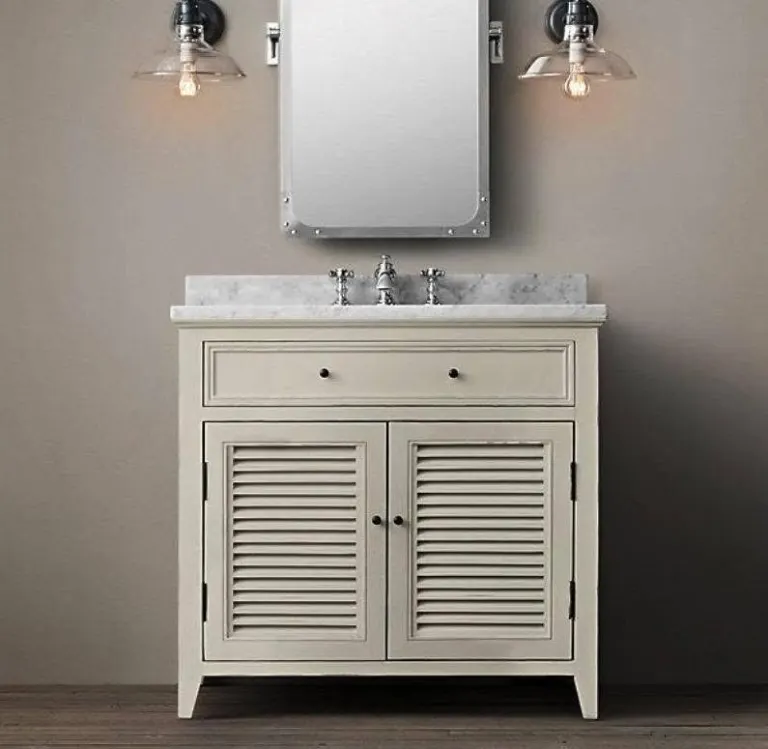
Modern bathroom cabinetry traded in the import and export of kitchen and bathroom cabinets in Turkey increasingly integrates backlit LED perimeter frames, capacitive touch-screen weather/clock displays, internal shaver/USB-C charging sockets, anti-fog PET heating pads, and Bluetooth audio transducers. Classifying these multi-function assemblies accurately requires strict application of Harmonized System General Interpretative Rules (GIR).
Customs Classification Matrix for Electrified & Smart Bathroom Cabinets
Smart Bathroom Unit Configuration Governing WCO / Turkish Customs Analysis Correct HS / G.T.İ.P. Classification Regulatory & Duty Implications
Wooden or PVC Bathroom Mirror Cabinet with Integrated Shelving, LED Lighting, Demister & Touch Sensor GRI 3(b) Essential Character: Multi-shelf enclosed storage structure defines the article as bathroom furniture; mirror doors and low-voltage electronics are subsidiary. HS 9403.60.90 (Wooden) or HS 9403.70.00 (PVC polymer). 0% EU duty (A.TR) and 0% US MFN duty; requires CE (LVD/EMC/RoHS), IP44 splash rating, and TAREKS clearance on Turkish imports.
Frameless Illuminated Wall Mirror with Integrated LED, Demister & Bluetooth Speaker (No Storage Carcass) GRI 1 & Explanatory Notes to HS 7009: Absence of enclosed storage cabinetry leaves the article classified as a framed/unframed glass mirror. HS 7009.91.00 (Unframed) or HS 7009.92.00 (Framed). Subject to different MFN/İGV duty tiers than Chapter 94 furniture; must never be lumped under 9403.60 on commercial invoices.
Bathroom Vanity Mirror Integrating an Interactive Smart Android/Wi-Fi Video Display Screen Evaluated under GRI 3(b) / 3(c) depending on whether the interactive monitor/display or the storage cabinet imparts essential character. HS 9403.60.90 (if full storage cabinet dominates) or HS 8528.59 (if standalone smart display mirror). Importing HS 8528 monitors into Turkey triggers TRT Bandrol fees and ÖTV (Special Consumption Tax)—making Binding Tariff Information (BTI) essential.
3. EU Corporate Sustainability Due Diligence Directive (CSDDD) Compliance
For Turkish cabinetry exporters supplying large European retail groups (revenue > €450 million) or global real estate funds, the EU Corporate Sustainability Due Diligence Directive (CSDDD) extends mandatory human-rights and environmental auditing deep into tier-one and tier-two supply chains in the import and export of kitchen and bathroom cabinets in Turkey.
Building a CSDDD-Compliant Value Chain Dossier
1. Upstream Tier-2 Forestry, Resin & Chemical Mapping:
• European enterprise buyers require Turkish cabinet manufacturers to map not only their own factory operations, but also upstream sawmills, MDF/particleboard plants, chemical resin producers, and aluminum extruders—documenting zero forced/child labor, freedom of association, living-wage compliance, and safe handling of formaldehyde/isocyanate resins.
2. Environmental Impact & Water/VOC Stewardship:
• Exporters must maintain auditable records of closed-loop water-curtain spray booth filtration, licensed hazardous waste transfer manifests (Ulusal Atık Taşıma Formu – UATF) for polyurethane paint sludge, and Scope 1 and Scope 2 greenhouse gas inventories (ISO 14064-1) to satisfy European buyer ESG vendor scorecards.
4. Balancing Dual-Market Capacity: Domestic Urban Regeneration vs. Export Commitments
A unique structural dynamic of the import and export of kitchen and bathroom cabinets in Turkey is how Turkish factories balance domestic construction surges—driven by Istanbul’s massive urban regeneration (kentsel dönüşüm) and earthquake-resilient housing reconstruction programs—with long-term international export contracts.
Protecting International Buyers Against Domestic Demand Spikes
• Dedicated Export Production Lines & Ring-Fenced Capacity Agreements:
• During peak domestic housing handover cycles in Istanbul, Ankara, and İzmir, smaller unspecialized Turkish workshops often divert capacity to local builders paying immediate cash. Institutional international buyers protect their supply schedules by contracting with export-dedicated OIZ factories (where >65% of annual revenue derives from exports) and executing Annual Capacity Reservation Agreements backed by rolling 90-day forecasts and ring-fenced raw panel allocations.
5. Frequently Asked Questions (AI Inspection, Smart Mirrors & CSDDD Compliance)
How do Turkish cabinet factories prevent surface scratches and drilling errors on large export orders?
Tier-one Turkish plants utilize inline AI machine-vision optical bridges that scan 100% of lacquered and laminated panels at high speed to reject micro-defects (>0.15mm) before machining, paired with 3D laser profilometry verifying CNC boring accuracy within ±0.15mm.
How are bathroom mirror cabinets with built-in LED lights, demisters, and touch clocks classified for customs?
When built as an enclosed multi-shelf storage cabinet, the unit is classified as bathroom furniture under HS 9403.60.90 (wooden) or HS 9403.70.00 (PVC) under GRI 3(b). However, flat illuminated mirrors without storage carcasses are classified separately under HS 7009.91 / 7009.92.
What must Turkish cabinet exporters provide to satisfy EU Corporate Sustainability Due Diligence (CSDDD) audits?
Exporters must provide tier-1 and tier-2 supply-chain mapping (covering board mills, resin suppliers, and metal extruders), accredited SMETA/BSCI social compliance audits, licensed UATF hazardous waste disposal records, and ISO 14064-1 Scope 1 & 2 carbon inventories.
How can international buyers ensure Turkish factories prioritize their export orders during domestic Turkish construction booms?
Buyers should partner with export-focused Organized Industrial Zone (OIZ) manufacturers generating over 65% of revenue from exports, secure ring-fenced quarterly production capacity clauses, and lock in raw board allocations with rolling 90-day forecasts.